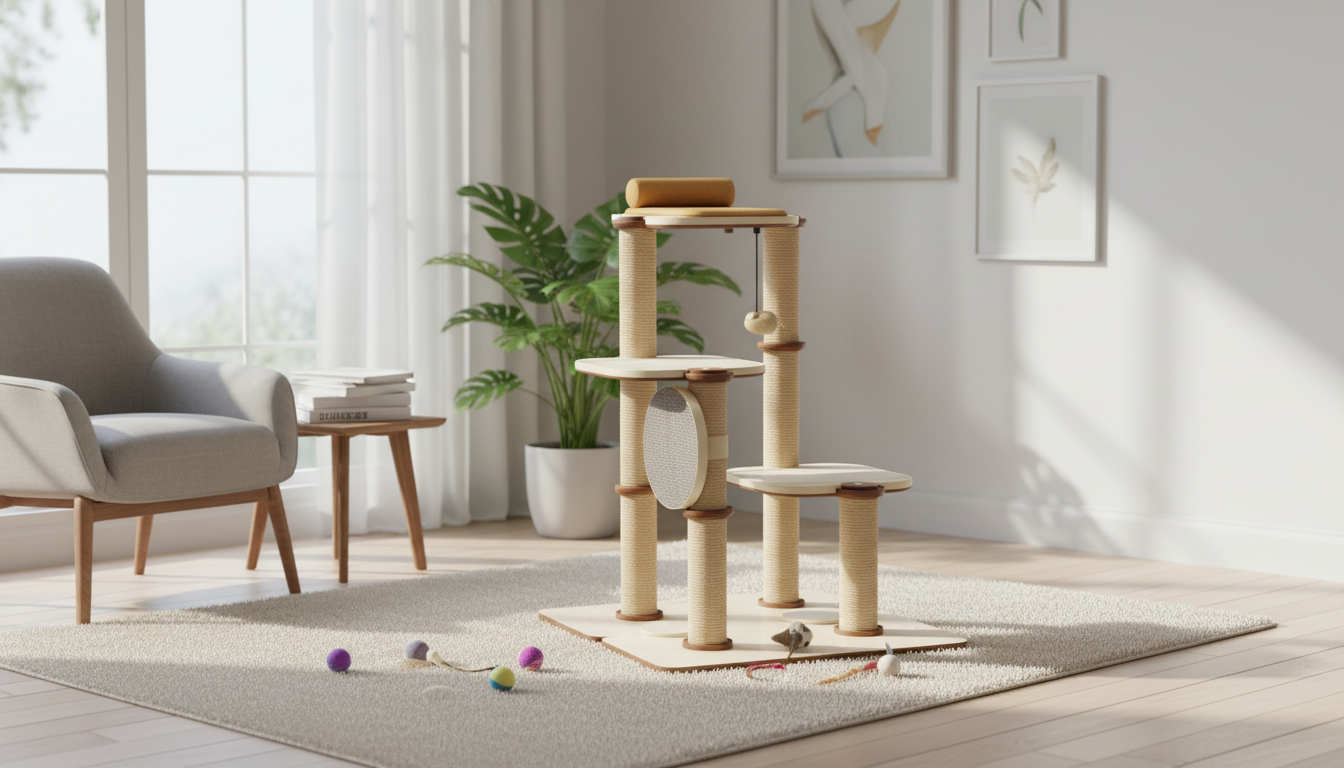
A modular cat tower can turn vertical space into a daily routine for climbing, perching, and relaxing—without locking the home into a single layout forever. This guide explains what a modular tower is, where it fits best, how to set it up for stability and comfort, and what to consider for different cats and living spaces.
Unlike a fixed, one-piece cat tree, a modular tower is built from sections that can be rearranged. That flexibility matters because cats don’t use a space the same way forever—routines shift, furniture moves, and a cat’s confidence and mobility can change over time.
For households focused on feline wellness, adding vertical territory is frequently recommended as part of meeting cats’ environmental needs. Resources like the American Association of Feline Practitioners (AAFP) Feline Behavior Guidelines and International Cat Care highlight how environment and accessible “safe” spaces can shape comfort and behavior.
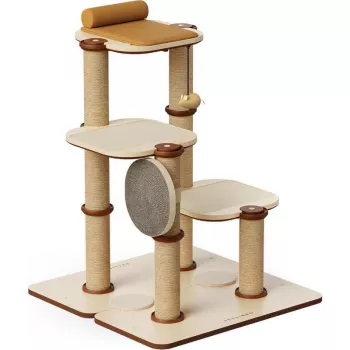
If the goal is a flexible tower with multiple levels that still keeps the footprint manageable, the Infinity Modular Cat Tree Tower is designed for exactly that kind of setup. It works well for creating a dedicated vertical zone away from high-traffic walkways and fragile décor, and it’s a practical choice for homes that expect changes—new pets, rearranged rooms, or a move.
| Item | Details |
|---|---|
| Product name | Infinity Modular Cat Tree Tower |
| Price | $371.17 USD |
| Availability | In stock |
| Product page | https://splendyn.com/infinity-modular-cat-tree-tower/ |
Placement often determines whether a tower becomes a daily hangout or a piece of “cat furniture” that gets ignored. Cats tend to return to places that offer predictable rewards: sunlight, a view, and a sense of control over the room.
One reliable approach is to place the tower where the cat already likes to be, then shift it slightly over time if needed. A modular build makes it easier to adapt without starting over.
Because modular towers can be rearranged, it helps to think in “routes” rather than “levels.” A good route gives the cat an easy first step, a clear middle, and a rewarding destination.
If a platform is being skipped, it’s often because the gap feels too large, the landing is too narrow, or the route forces a cat to pass another cat in a tight “choke point.” Small rearrangements can fix that quickly.
A tower should feel solid under a running jump and a sudden mid-climb turn. Stability is also what allows a cautious cat to try it in the first place.
If your cat enjoys supervised outings, consider pairing indoor vertical time with calm “transition routines” for leaving the house. For travel days, the Portable Pet Water Bottle for travel days can make hydration simpler, and a Retractable leash for outdoor walks and training can help keep sessions controlled and predictable.
If you want one tower that can evolve as your cat’s habits change, a modular option like the Infinity Modular Cat Tree Tower is a practical way to keep vertical enrichment consistent without committing to a single, permanent layout.
They let you adjust spacing and create multiple routes so one cat isn’t forced to squeeze past another at a single “bottleneck.” Adding distinct resting levels helps spread resources vertically, which can lower day-to-day tension.
Near a window or in a social area the cat already frequents usually drives the most consistent use. Avoid loud pinch points like tight hallways, and consider a calmer retreat-zone placement for shy cats.
Check it right after setup, again after the first few days of heavy use, and then periodically (often monthly). Re-tighten connectors as needed and confirm the base remains level and non-slip.





Leave a comment