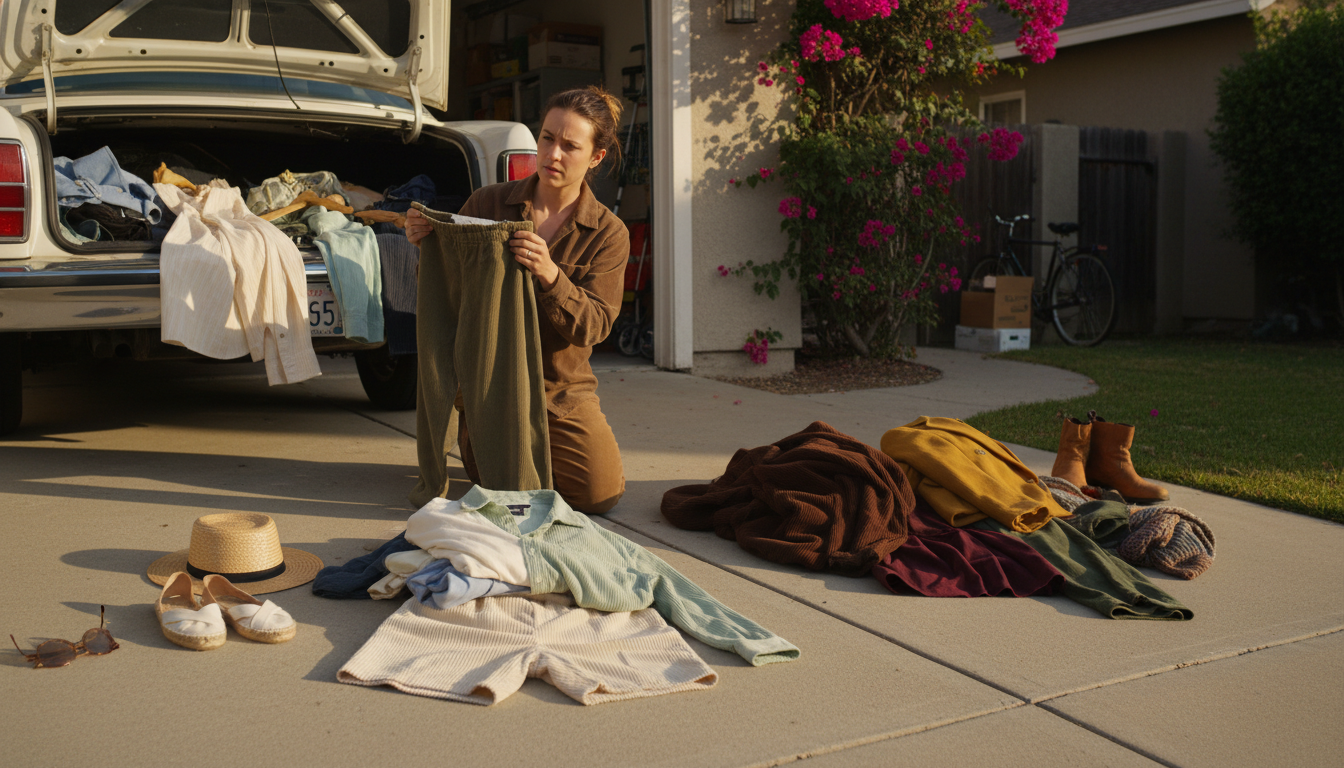
Corduroy is traditionally a winter fabric, but it can work in summer too—depending on the wale (rib) size, fabric weight, and how it’s styled. The classic corduroy most people picture is thicker and insulating, which makes it ideal for fall and cold-weather layering. Lighter corduroy options, however, can feel breathable enough for cooler summer days or air-conditioned indoor settings.
Corduroy’s signature ridged texture creates tiny air pockets that help hold warmth. Many corduroy garments are also made with heavier cotton weaves that naturally feel cozier than lightweight summer fabrics like linen or poplin. Because of that, corduroy pants, overshirts, and jackets are commonly worn from late fall through early spring.
Winter-friendly corduroy usually has a mid-to-heavy weight and a softer, plush hand feel. It pairs well with knits, flannels, boots, and structured outerwear, making it a reliable cold-weather staple.
Corduroy can still fit into a warm-weather wardrobe when the fabric is lighter and the garment is designed for airflow. Look for thin-wale (fine-rib) corduroy and pieces like shorts, skirts, relaxed-fit trousers, or shirt-jackets that aren’t heavily lined. Lighter colors—such as tan, cream, pastel blue, or faded olive—also help corduroy read more seasonal and feel less heat-absorbing than dark shades.
For summer styling, keep the rest of the outfit simple and breathable: a cotton tee, a tank, or a short-sleeve button-down. Corduroy tends to look best when the silhouette stays relaxed rather than overly tight, which helps it feel less heavy.
For a deeper breakdown of seasonal wear, fabric weight, and styling ideas, visit https://splendyn.com/is-corduroy-for-summer-or-winter/.
Wide-wale corduroy has thicker ribs and usually feels warmer and more rugged. Fine-wale corduroy has thinner ribs and typically drapes better, often making it a lighter, more flexible option.





Leave a comment