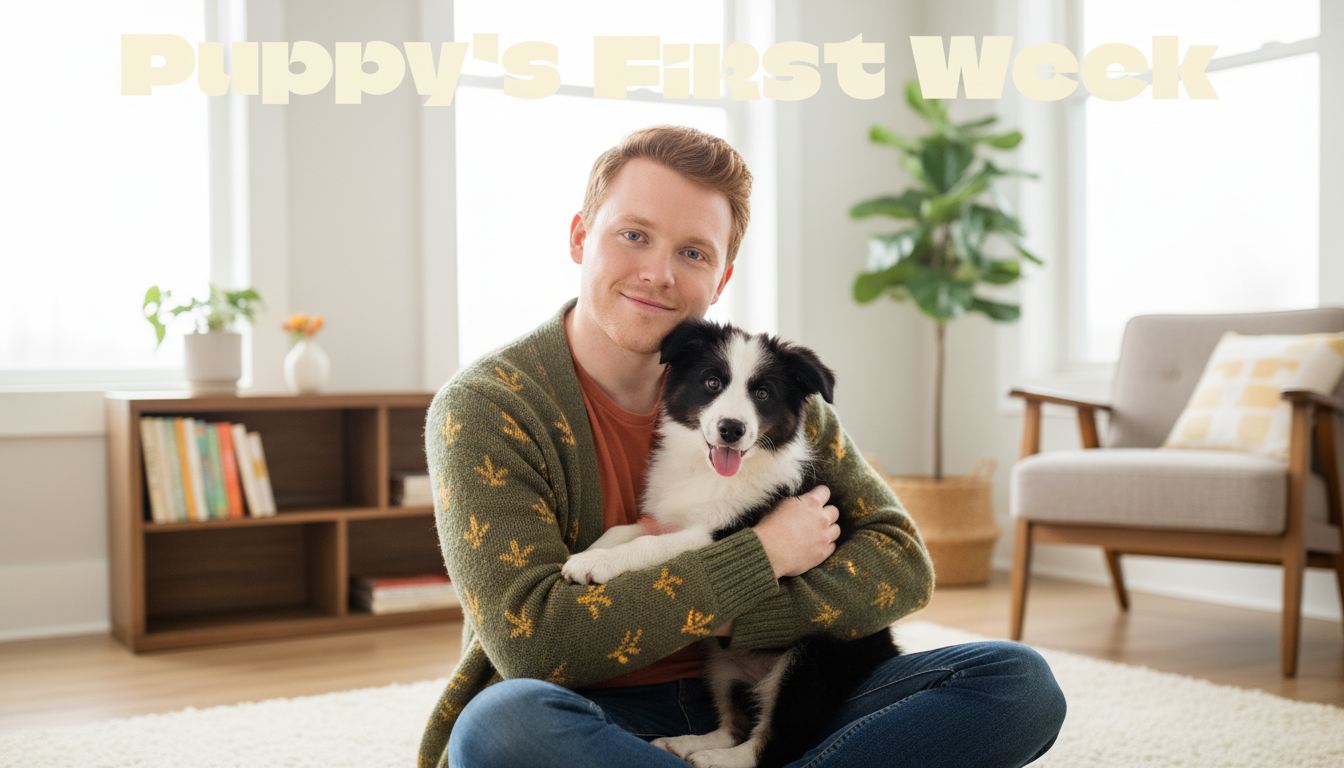
The first week with a new puppy sets the tone for sleep, potty habits, comfort with handling, and calm behavior at home. A simple plan—built around predictable meals, naps, potty breaks, gentle training, and gradual exposure—helps your puppy feel safe while making daily life manageable for a new dog owner.
A quick setup prevents most “first-night chaos” and reduces accidents. Keep it simple and focused.
Day 1 is about safety and decompression—not showing off tricks or meeting the whole neighborhood.
Consistency is your best training tool. Aim for predictable cycles: potty → play/training → food → potty → nap. Puppies usually need 18–20 hours of sleep per day, and an overtired puppy is more likely to bite, whine, and struggle to settle.
| Time Block | What to Do | Goal | Notes |
|---|---|---|---|
| Wake-up | Potty trip immediately | Build potty habit | Carry small pups to the spot to prevent accidents en route |
| Morning | Breakfast + water, then potty | Digestive routine | Use part of the meal as training rewards |
| After breakfast | 2–3 minutes of training + calm play | Bonding and focus | End while the puppy is still engaged |
| Mid-morning | Nap in crate/playpen | Rest and self-settling | Provide a safe chew if needed |
| Midday | Potty, lunch (if feeding 3x/day), potty | Consistent elimination | Track times to spot patterns |
| Afternoon | Short walk/yard time + handling practice | Confidence and manners | Avoid crowded areas until vaccines allow |
| Evening | Dinner, potty, gentle play, wind-down | Calm household rhythm | Switch to sniff games or lick mats for settling |
| Bedtime | Final potty + crate sleep | Night routine | Expect one or more potty trips for young puppies |
If you want a deeper, day-by-day guide you can follow without overthinking, use the Puppy’s First Week: A Happy Start eBook download for a ready-to-use routine and training plan.
For step-by-step crate guidance and common troubleshooting, see the ASPCA’s resource on crate training your dog.
If the household is feeling overstimulated, a structured calm-down approach can help humans stay consistent. The Stay Calm Within Mindful Parenting System – 4-in-1 Bundle for Parents can support steady routines and calmer reactions during the adjustment period.
For an overview of why early experiences matter and how to keep them safe, review the AVMA guidance on puppy socialization.
For potty-specific troubleshooting and timing tips, the AKC overview of puppy potty training basics is a helpful reference.
Take your puppy out immediately after waking, after eating or drinking, after play, and at regular intervals—often every 1–2 hours for very young puppies. Adjust based on age, size, and your puppy’s patterns, and use a quick log for a few days to dial in timing.
A crate can improve safety and speed up potty training because it helps your puppy settle in a predictable spot. Make it comfortable with treats and calm crate practice during the day; if your puppy whines at night, do a quick, boring potty break and return to the crate.
Confirm your puppy’s vaccine status and local risk factors with a veterinarian before visiting busy public areas. In the meantime, focus on low-risk exposure—car rides, new sounds and surfaces, and meetings with known healthy dogs in controlled settings.





Leave a comment