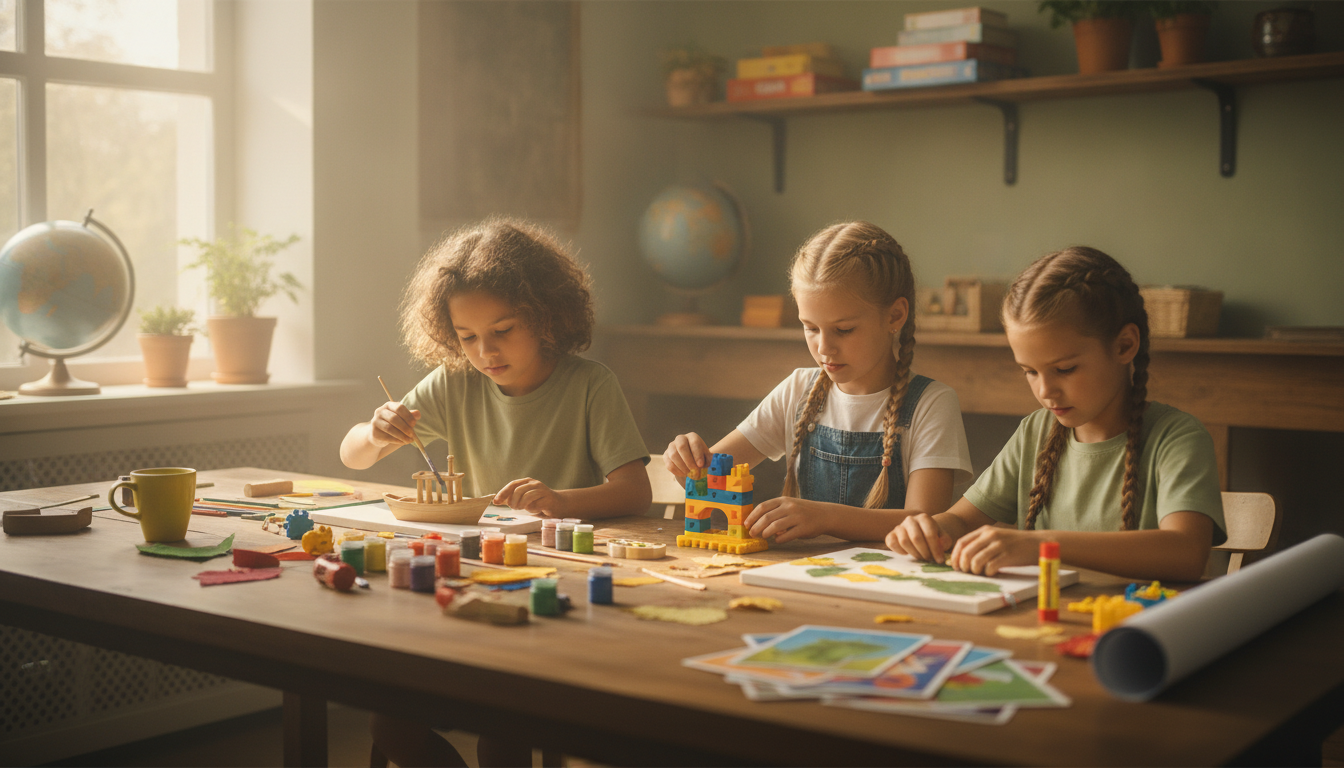
Offline hobbies give kids a chance to build confidence, patience, and creativity—without needing a device. With a few small shifts, hands-on activities can feel just as “worth it” as a screen: easier to start, more satisfying to finish, and simpler to repeat. The goal isn’t to eliminate digital fun—it’s to build a home or classroom rhythm where kids regularly experience the pride of making, moving, and exploring in the real world.
Offline hobbies develop skills that fast-moving screens don’t always practice in the same way. When kids draw, build, cook, garden, or collect, they work through real-world obstacles: tools don’t cooperate, pieces don’t fit, and outcomes take time. That’s where persistence grows.
For a helpful framework around screens and boundaries, the American Academy of Pediatrics offers a practical Family Media Plan that supports balance without turning everything into a battle.
If offline hobbies have been met with eye rolls, it’s usually not laziness—it’s the mismatch between how screens reward the brain and how hobbies reward effort.
Look for repeating themes in books, shows, and questions: animals, mysteries, maps, machines, fashion, music, cooking, sports, or helping. Those patterns point to hobbies that feel familiar instead of random.
Make the first session short enough to finish before frustration hits—10 to 15 minutes is plenty. A tiny start builds the “I can do this” feeling, which is often the missing ingredient.
Rotate options weekly while keeping a few favorites available daily. Use choice architecture: offer three options, not twenty. Then link the activity to a role that feels exciting: chef, engineer, artist, explorer, helper, scientist, or storyteller.
Kids stay engaged longer when the hobby matches their energy in the moment. Keep a mix ready so the alternative to screens feels realistic, not forced.
| Hobby | Best for | Starter supplies | First session goal (10–15 minutes) |
|---|---|---|---|
| Nature scavenger hunt | Active + curious | Paper list, pencil, bag | Find 5 items; draw or label them |
| Mini sketch challenge | Creative | Pencil, paper | Draw 3 objects using only shapes |
| Kitchen helper skills | Practical | Measuring cups, safe tools | Make a snack using 3 steps |
| Puzzle sprint | Calming | Puzzle or tangram | Complete 20 pieces or 2 tangram shapes |
| Paper engineering | Maker mindset | Paper, tape, scissors | Build a bridge that holds a book |
For active kids who need a movement outlet, aligning hobbies with recommended activity levels can help. The CDC’s overview on how much physical activity children need makes it easier to plan realistic daily movement.
Play supports learning, resilience, and social growth—and it doesn’t need to be complicated. Harvard’s overview on the importance of play highlights why unstructured, child-led time matters.
If you want a ready-made set of prompts and planning pages, see Adventures Beyond Screens: Inspiring Kids to Explore Offline Hobbies (Printable Guide). For parents who also want tools to stay steady during transitions and boundary-setting, Stay Calm Within Mindful Parenting System – 4-in-1 Bundle for Parents can support a calmer, more consistent approach.
Start small: 10–30 minutes a day is often enough to change the tone, especially when it’s consistent. Pair a clear limit with a specific, appealing offline option so the transition feels possible.
Use tiny-start sessions (10 minutes), co-do the first few minutes, and offer only three choices at a time. Connect the activity to what they already like, and praise effort and curiosity more than the final result.
Choose short, hands-on activities with quick feedback: building challenges, scavenger hunts, simple crafts, and puzzles. A predictable routine and a low-distraction space help these hobbies feel easier to begin and finish.







Leave a comment