AI Tricks for Packing Toiletries Like a Minimalist: A Digital Checklist for Smart, Minimal Travel
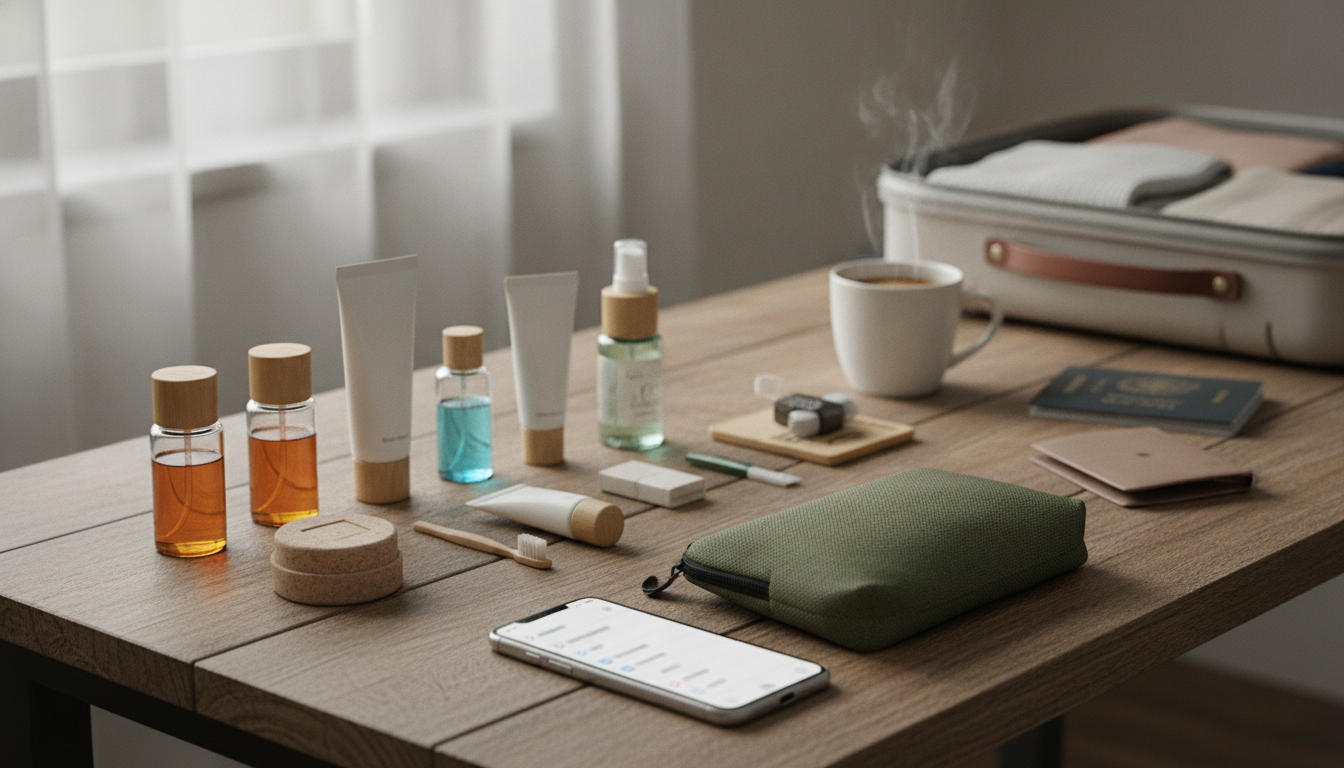
Minimal toiletry packing gets easier when decisions are made once, then reused trip after trip. The fastest way to stay light (without forgetting essentials) is to build a “core kit” and pair it with a smart digital checklist that adjusts for trip length, climate, activities, and carry-on rules. You’re not trying to pack less for the sake of it—you’re packing fewer, better items with reliable coverage.
The minimalist toiletry mindset: fewer items, better coverage
Minimalism works when every item earns its space. Start by picking multi-use products that cover multiple needs—cleanse, moisturize, protect, and style—so one product can replace two or three.
- Choose 2–4-in-1 products: a cleanser that works for face + body, a moisturizer that layers under sunscreen, or a soap that can also handle a quick laundry rinse.
- Standardize a “core kit”: build an always-packed base that rarely changes, then only add what the specific trip requires.
- Replace duplicates with one contingency item: instead of backups for everything, pack one flexible “save the day” item (like travel soap or a stain wipe).
- Prefer solids or concentrates: they reduce leak risk and shrink your liquids bag.
Set up a smart digital checklist that packs itself
A good checklist acts like a decision filter. It prevents “maybe” items from sneaking in by forcing a simple yes/no based on your trip variables.
- Build three layers: Core (always), Conditional (only if needed), and Optional (comfort items).
- Add quick toggles: number of days, weather, activities (business, beach, hiking), and laundry access.
- Create removal rules: if the hotel provides shampoo, your checklist automatically skips shampoo.
- Use quantity ranges: track “3–5 days” vs. “7–10 days” to avoid over-precision that leads to overpacking.
Checklist logic: inputs that change what gets packed
| Trip input |
Auto-add items |
Auto-remove or reduce |
Notes |
| Carry-on only |
1-quart liquids bag, solids where possible |
Full-size liquids, glass containers |
Stay within liquid limits and keep all liquids together |
| Hot/humid climate |
Deodorant, anti-chafe balm |
Heavy creams |
Swap to lightweight gel moisturizer |
| Cold/dry climate |
Richer moisturizer, lip balm |
Alcohol-heavy toners |
Add small hand cream if needed |
| Beach/pool |
Reef-safe sunscreen, after-sun lotion |
Hair styling extras |
Consider solid sunscreen stick to save space |
| Business meetings |
Grooming items, lint wipe, mini fragrance (if allowed) |
Extra casual-only items |
Keep kit compact and polished |
| Laundry access |
Small detergent sheet/soap, stain pen |
Extra underwear/extra toiletries |
Less need for duplicates |
AI-style packing rules that prevent duplicates and “maybe” items
Borrow a few “rule-based” tricks to make your toiletry kit self-editing:
- One-in, one-out: if you add a specialty item (like a mask or styling product), remove a similar-function item from the core kit.
- Coverage scoring: each item must solve a distinct problem (clean, protect, treat, groom). If two items solve the same problem, keep the smaller or more versatile one.
- Container standardization: limit yourself to 2–3 bottle sizes (for example, 10 ml, 30 ml, 50 ml) to reduce clutter and decision fatigue.
- Leak-risk filter: anything prone to leaking must be solid, double-bagged, or swapped for a more stable alternative.
Build the minimal core kit (most trips, most travelers)
A reliable core kit should cover cleanliness, protection, basic treatment, and quick grooming—without turning into a portable bathroom cabinet.
- Clean: solid cleanser bar or small liquid cleanser; small toothpaste; foldable toothbrush; floss picks or mini floss.
- Protect: sunscreen (stick or small bottle), deodorant, lip balm with SPF if outdoors.
- Treat: tiny blister kit (bandages + antiseptic wipes), a few pain relievers (as allowed), any daily prescriptions.
- Groom: small comb, nail clippers, minimal makeup or beard essentials based on routine.
- Hygiene: a few wipes (face/body), hand sanitizer (within liquid limits), menstrual products if needed.
Trip-length scaling: pack by “uses,” not by bottle size
Instead of staring at containers and guessing, translate your routine into “uses.” This makes it easier to scale up without doubling everything.
- Convert to use-counts: face wash uses/day, toothpaste uses/day, sunscreen reapplications/day.
- For 1–3 days: sample sizes and solids usually cover everything; skip backups entirely.
- For 4–7 days: add only what runs out fastest (often sunscreen, toothpaste, contact lens solution).
- For 8–14 days: prioritize refillables and plan one restock option (hotel shop, local pharmacy) instead of packing duplicates.
Carry-on compliance without sacrificing routine
Security rules are easiest when your kit is designed around them from the start. In the U.S., the TSA liquids guideline is the key baseline (and other countries may differ), so keep your setup flexible and check rules before you fly.
Helpful references: TSA Liquids Rule, FAA PackSafe guidance, and the CDC travel preparation overview.
Micro-organization: pack for speed at sinks, gyms, and security
A ready-to-use digital checklist template
Digital checklist downloads (lightweight, reusable, and fast)
FAQ
What toiletries can be packed in a carry-on?
Most common toiletries are allowed, but liquids, gels, and aerosols typically need to fit within size limits and go in a clear quart-size bag; rules can vary by country and airline, so confirm before departure. Solids (like bars and sticks) are often simpler for screening.
How do you avoid overpacking toiletries for a week-long trip?
Use a fixed core kit, then scale quantities by use-counts instead of packing full containers. Choose multi-use products, standardize bottle sizes, and plan one restock option rather than packing duplicates “just in case.”
Are solid toiletries better for minimalist travel?
Often, yes—solids save space, reduce leaks, and can make security easier. The tradeoff is storage and drying time, so bring a ventilated case or let bars air-dry briefly before packing them away.
Recommended for you




Leave a comment