A Parent’s Checklist for Saving on Baby Formula: Budgeting and Smart Shopping Made Simple
Baby formula can become one of the biggest recurring baby expenses. A simple, repeatable system—budgeting, price tracking, and safe cost-saving choices—helps lower the monthly total without sacrificing your baby’s needs. Use the checklist approach below to find savings in small steps that add up quickly.
Start With the Non‑Negotiables: Safety and Consistency
Before chasing discounts, set guardrails that protect your baby’s health and keep your routine stable.
- Confirm with a pediatrician whether any specialty formula is medically necessary (hypoallergenic, amino-acid based, thickened, etc.). These constraints change what “saving” can safely look like.
- Avoid switching formulas frequently just to chase small price differences. If a change is needed, make it deliberately and monitor tolerance (stool changes, rash, reflux, fussiness).
- Never dilute formula to “make it last longer” and never use homemade recipes; both can be dangerous.
- Check for active recalls and verify the container seal and expiration date before buying; skip damaged packaging even if discounted.
For clear, safety-first guidance, the FDA’s infant formula safety and nutrition information is a helpful reference.
Build a Formula Budget That Matches Real Usage
Formula costs feel unpredictable when the budget is based on “cans per week.” A better approach is to base your plan on prepared ounces and real feeding patterns.
- Estimate weekly consumption based on age and feeding pattern, then convert to monthly cans/tubs. Update the estimate every 2–4 weeks as intake changes.
- Calculate cost per day and cost per ounce of prepared formula rather than cost per container; it creates an apples-to-apples comparison across sizes and brands.
- Create a buffer line in the budget for growth spurts and travel days. Small overages are easier to manage than last-minute emergency purchases.
- Plan for related costs that quietly add up: nipples, bottle replacements, dishwasher basket, and extra water filters (if used).
Quick Cost Comparison (Fill In as You Shop)
| Formula option |
Container size (oz or g) |
Servings per container |
Price |
Cost per prepared oz |
Notes (coupons, membership, tolerance) |
| Brand/Type A |
|
|
|
|
Baseline option |
| Brand/Type B |
|
|
|
|
Compare unit price |
| Store brand equivalent |
|
|
|
|
Confirm same type (standard/gentle/sensitive) |
| Bulk club size |
|
|
|
|
Check shelf life and storage space |
Use Price Systems That Repeat (Not One‑Off Deals)
One coupon feels good; a repeatable system changes your monthly total. The goal is to make “smart buying” almost automatic.
- Track prices at 2–3 reliable stores (one local, one big-box, one online) and note the “good price” threshold so decisions are fast.
- Stack savings in the correct order when allowed: store sale + store coupon + manufacturer coupon + rewards (terms vary by retailer).
- Sign up for retailer baby programs and loyalty rewards; even small monthly credits or points can reduce the effective cost.
- Schedule checks around predictable deal cycles: end-of-month promotions, holiday sales, and periodic “spend X, save Y” offers.
Tip: keep a single note on your phone with (1) your baby’s exact formula type, (2) the lowest “good price” you’ve seen for it, and (3) which store usually hits that number.
Smart Substitutions and Equivalents (When Appropriate)
Some families have flexibility; others don’t. If you do, substitutions can be one of the biggest levers for savings.
- Ask a pediatrician or pharmacist about equivalent types (standard milk-based, gentle, lactose-reduced, AR/thickened, soy, hypoallergenic) before changing.
- Consider store-brand formula if your baby tolerates it and the type matches; many store brands meet the same FDA nutrient requirements as name brands.
- Choose powder vs. ready-to-feed based on true use-case: powder is often cheapest, while ready-to-feed can reduce waste for occasional feedings or travel if it prevents unused prepared formula from being discarded.
- Avoid overbuying a formula your baby hasn’t tried; test tolerance with a smaller size first when possible.
Reduce Waste: The Hidden Way to Save
Waste is often the invisible “extra can” you didn’t plan for. Tightening your prep and storage habits can save money without reducing ounces offered.
For step-by-step handling and storage details, the CDC’s guidance on preparing and storing powdered infant formula is a reliable resource.
Stretch Savings With Support Programs and Community Resources
To explore eligibility basics and program info, visit the USDA WIC Works Resource System.
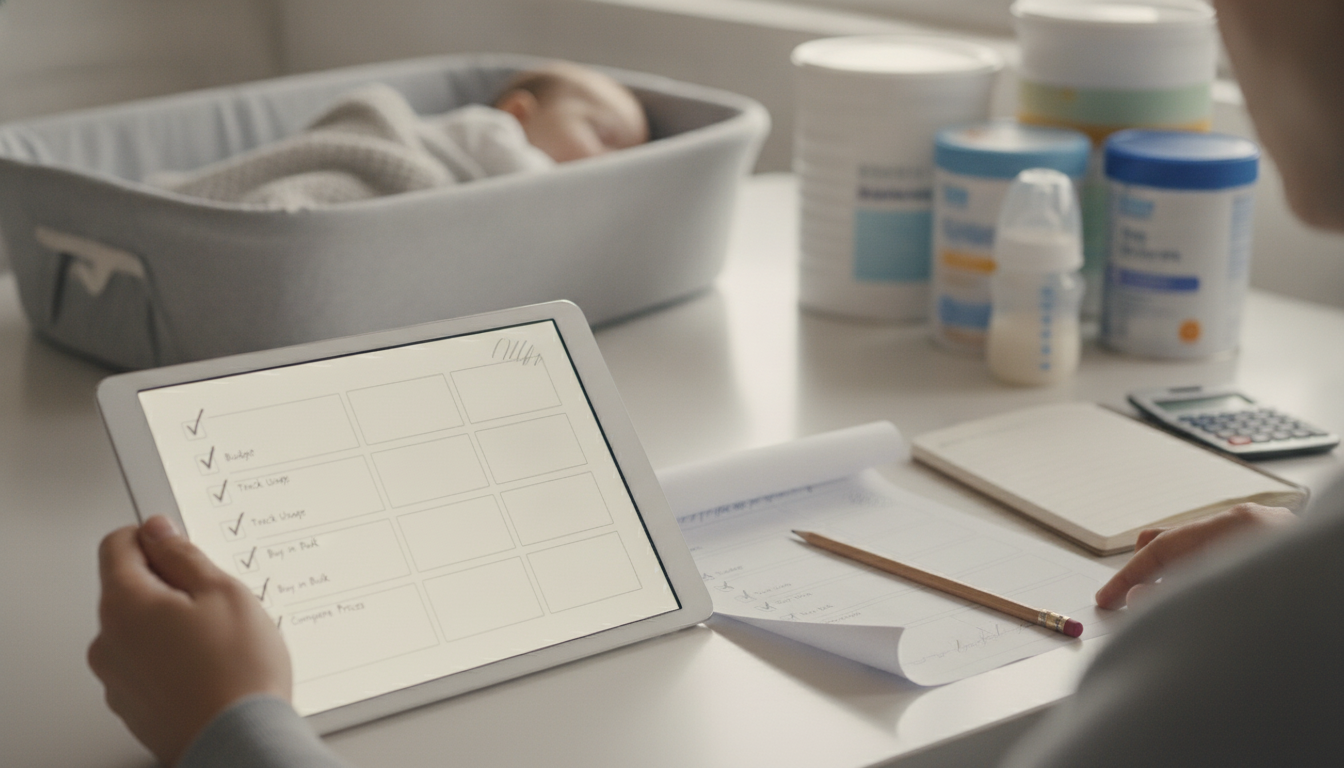
Printable Checklist: Turn the Plan Into a Weekly Routine
Helpful tools you can use right away
FAQ
Is it safe to switch to a store-brand formula to save money?
Many store-brand formulas meet FDA nutrient requirements, but the key is matching the same formula type (standard vs. gentle vs. sensitive, etc.). If your baby is on a specialty formula or has allergies, talk with your pediatrician before switching.
What’s the best way to compare formula prices across brands and container sizes?
Compare cost per prepared ounce (or cost per feeding) instead of the sticker price on the can. Use the servings-per-container information to set a baseline, then factor in coupons and rewards as extra savings.
How can parents reduce formula waste without cutting feedings?
Offer smaller bottles when you’re unsure how much will be finished, and follow safe storage/discard timelines for prepared formula. Rotating stock by expiration date and avoiding large purchases of untested formulas also prevents costly waste.
Recommended for you




Leave a comment