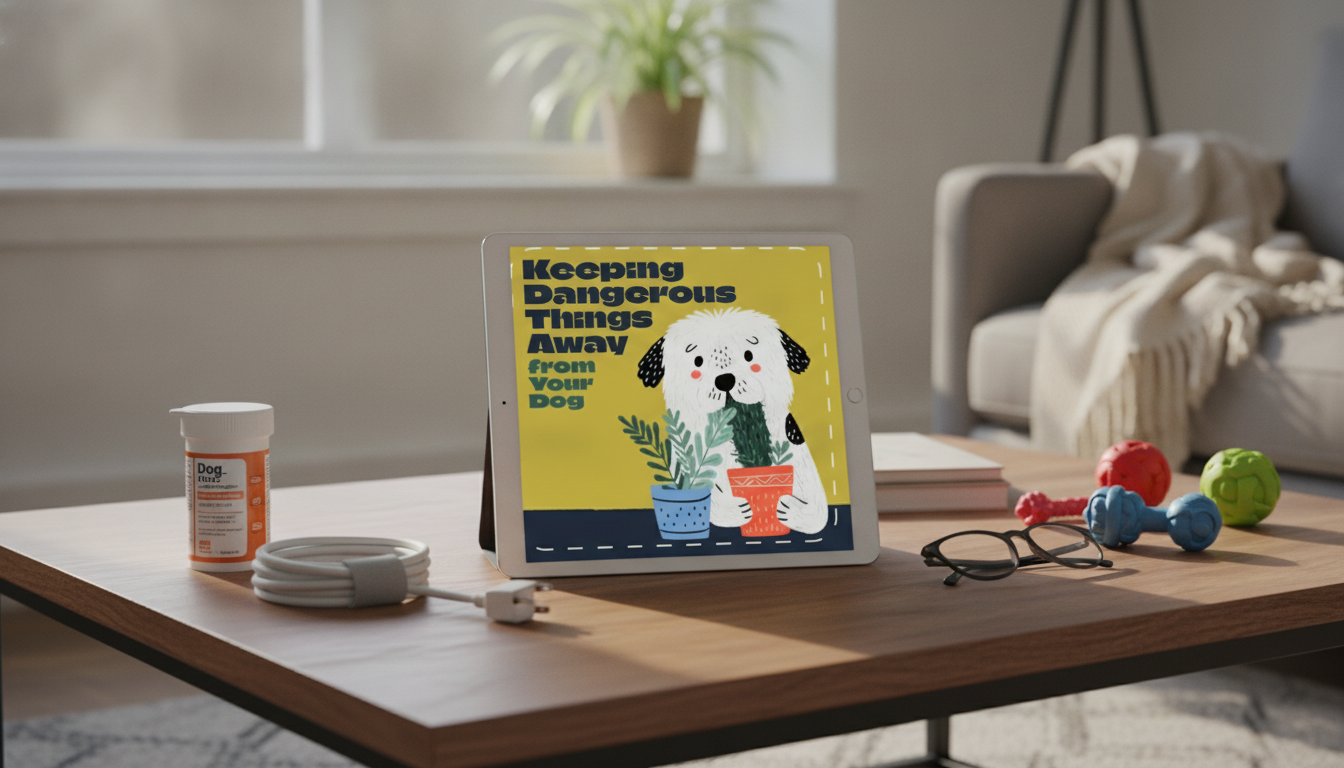
Dogs explore with their mouths, noses, and paws—often faster than a person can react. A safer home comes from knowing the most common hazards, where they hide, and what small routines prevent emergencies. Use the sections below to spot risks room-by-room, build simple storage habits, and prepare for quick action if something goes wrong.
Most household accidents aren’t dramatic—until they are. Puppies (and plenty of adults) grab, chew, and swallow items simply because they can. Small objects can become life-threatening obstructions, and many toxins are dose-dependent, meaning a small dog can be harmed by amounts that might not affect a larger dog.
If you prefer a printable reference you can keep on your phone or share with family members, The Guide to Keeping Dangerous Things Away from Your Dog (digital download) is a quick, room-friendly checklist you can revisit anytime.
Kitchens combine the perfect storm: irresistible smells, dropped scraps, and high-risk ingredients. Secure the known toxins (and anything that can splinter or lodge in the gut), and treat the trash can like a locked cabinet.
| Item | Why it’s risky | Simple safeguard |
|---|---|---|
| Chocolate/cocoa powder | Stimulant toxicity | Store in closed pantry; wipe spills immediately |
| Xylitol (gum, mints, baked goods) | Can cause severe low blood sugar and liver injury | Keep in sealed containers; check labels on “sugar-free” products |
| Grapes/raisins | Can trigger kidney injury in some dogs | Avoid sharing; keep fruit bowls out of reach |
| Onion/garlic (incl. powders) | Can damage red blood cells | Seal seasonings; keep scraps off plates |
| Trash/food wrappers | Obstruction and toxin exposure | Locking/lidded bin; take trash out regularly |
Human medications are among the most common causes of pet poisoning. Dogs don’t need to “get into” a cabinet for exposure—dropped pills and countertop organizers are enough.
Many cleaning products irritate the mouth and stomach at best, and cause severe burns or organ damage at worst. Laundry pods and automotive fluids deserve “high-alert” storage.
For households where supplies tend to migrate between the car, garage, and laundry area, a simple “reset” routine helps. A quick organization prompt like Car Cleaning Hacks to Keep Your Ride Fresh (digital checklist) can double as a reminder to return chemicals and wipes to closed storage after use.
Plants and yard products are tricky because risk varies by species, region, and the dog’s habits (some nibble leaves; others dig). Before bringing home a new plant, confirm it’s dog-safe. The ASPCA Animal Poison Control plant list is a dependable reference.
When multiple people share a home, consistency matters as much as intent. A family routine tool like Stay Calm Within Mindful Parenting System – 4-in-1 Bundle for Parents can help reinforce calmer, repeatable household habits—especially in busy, kid-and-dog households where items get left out unintentionally.
For poison identification and next steps, reputable resources include the Pet Poison Helpline poison list and the FDA guidance on xylitol and pets.
Common culprits include human medications, chocolate, xylitol-sweetened products, grapes/raisins, cleaning chemicals, rodenticides/insecticides, nicotine items, and certain toxic plants. The amount matters, and smaller dogs can be affected by much lower doses.
No—don’t induce vomiting unless a veterinarian or poison expert tells you to. Some substances (corrosives, oils, sharp objects) can cause worse injury on the way back up, so call first and follow professional instructions.
Warning signs include repeated vomiting, refusing food, lethargy, abdominal pain, straining to poop, diarrhea or constipation, and a bloated or tense abdomen. A suspected blockage needs prompt veterinary care.





Leave a comment