
When income rises, spending often rises with it—sometimes so gradually that it barely registers. A new subscription here, a few more delivery orders there, and suddenly your “normal” costs more than your old budget ever planned for. The result isn’t always reckless spending; it’s recurring commitments that quietly absorb raises and bonuses. For more guidance, see [PDF] NatioNal Drug CoNtrol Strategy – Trump White House Archives.
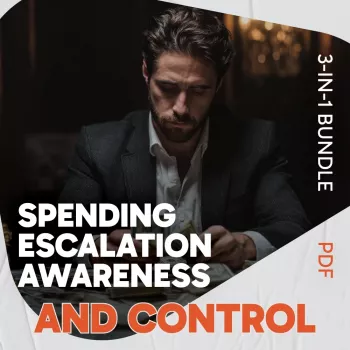
A practical toolkit helps by turning vague feelings (“Why is money tighter now?”) into clear visibility, simple rules, and a repeatable weekly rhythm. If you want structure without turning your life into a spreadsheet, the Spending Escalation Awareness and Control Toolkit | Lifestyle Inflation 3-in-1 Bundle is designed to help you spot escalation, set guardrails, and keep lifestyle choices intentional—without draining the fun out of your life. For further reading, see The High Cost of American Health Care: Understanding the Deeper ….
Lifestyle inflation rarely shows up as one huge mistake. More often, it’s a series of “small upgrades” that stack into a bigger monthly burn rate.
What makes this tricky is that each change can feel reasonable in isolation—especially during busy seasons, stressful stretches, or after a raise. The problem is the cumulative effect on flexibility and future goals.
Spending escalation isn’t just a math problem. It’s also psychology, habit loops, and friction-free buying environments.
| Trigger | What it looks like | Control to try this week |
|---|---|---|
| Recurring charges | Subscriptions and memberships slowly multiply | Cancel/pausing sweep; set a monthly subscription cap |
| Convenience routines | Delivery, rideshare, premium add-ons | Pre-commit to 2–3 “convenience days” per week |
| Payday splurges | Impulse upgrades right after income hits | 24-hour rule + a preset “fun money” amount |
| Social spending | Keeping up with friends’ plans | Suggest lower-cost defaults; set a per-event limit |
| Status upgrades | Bigger apartment/car as soon as earnings rise | Delay major upgrades 90 days; run a fixed-cost stress test |
Awareness doesn’t require perfection. It requires a short window of real data and a way to interpret it without excuses or shame.
If you want a credible, research-backed foundation for improving budgeting habits, the CFPB’s budgeting resources can be a helpful reference point: https://www.consumerfinance.gov/consumer-tools/budgeting/.
Control works best when it’s designed as a system—not a temporary burst of discipline. Guardrails protect the life you want while keeping money aligned with priorities.
Many “why did I buy that?” moments come down to decision shortcuts and fatigue. A readable overview of behavioral patterns behind everyday choices is available here: https://thedecisionlab.com/reference-guide/behavioral-economics.
If your spending habits tend to swing with stress or time pressure, pairing money systems with supportive routines can help. For example, some households also build calmer home rhythms with tools like the Stay Calm Within Mindful Parenting System – 4-in-1 Bundle for Parents—because fewer overwhelmed days often means fewer convenience purchases.
For people who want quick, checklist-driven wins in other parts of life, small systems can reinforce the “process over impulses” mindset—like a simple routine builder such as the Home Cardio Blast Checklist | Instant Digital Download for Effective Cardio Workouts at Home.
Use guardrails rather than bans: set fixed-cost ceilings, pre-allocate a lifestyle allowance, and require trade-offs for upgrades so spending stays intentional.
Start with a short weekly review using a simple tracker: capture recurring charges, note top leak categories, and record the “why” behind outlier purchases.
Create a “raise rule” in advance (for example, a fixed percentage to savings/debt, a portion to lifestyle, and a portion to future goals) and automate the goal portion first.





Leave a comment