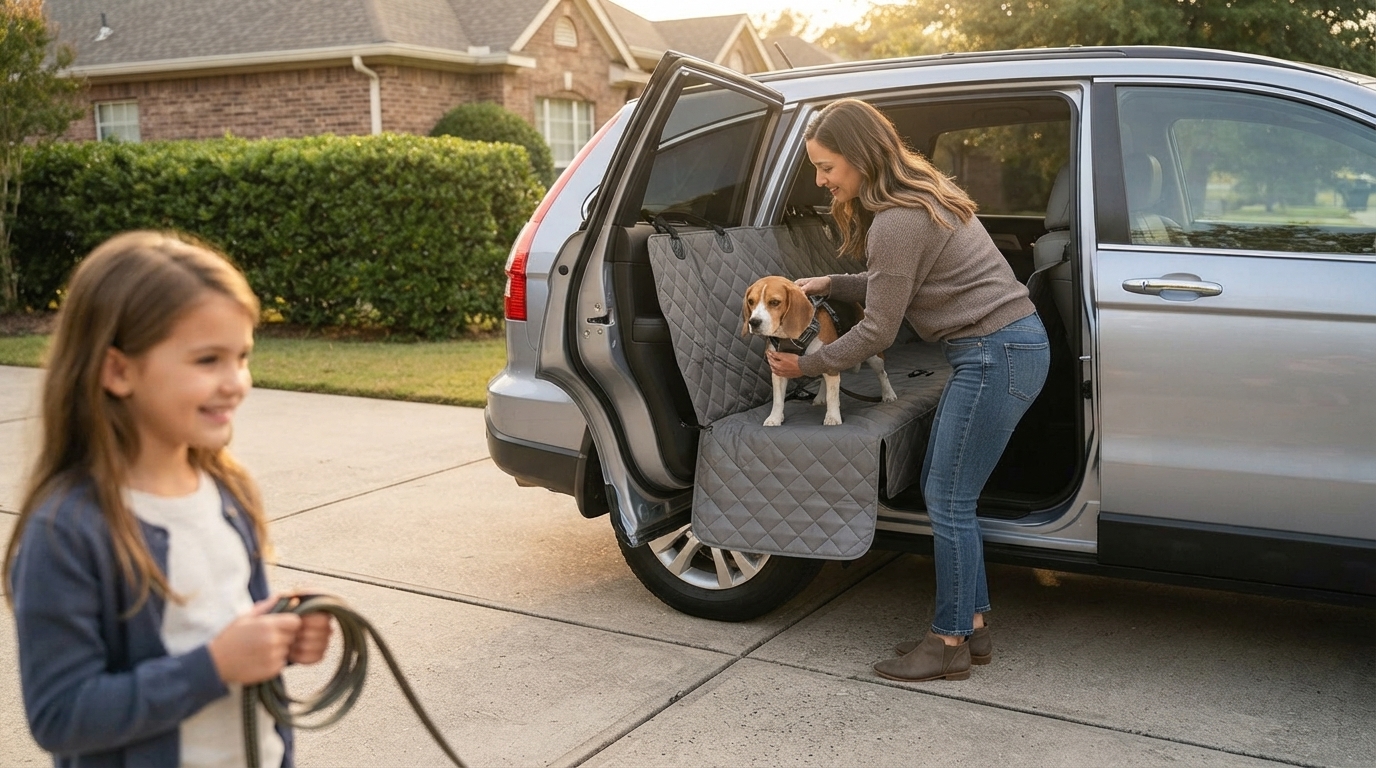
A dog car seat can be worth it if your dog rides in the car often and tends to slide, pace, or try to climb into the front. A good seat creates a defined space that helps many dogs settle faster, while also protecting your upholstery from fur, dirt, and wet paws. It’s especially helpful for smaller dogs that can’t see out the window or feel unstable on a flat seat.
The biggest value is safety and control. A car seat is designed to keep your dog more contained during turns and stops, and many models include attachment points that work with a harness to reduce roaming. While no accessory can make a crash “safe,” limiting movement can lower the chance of distraction and may reduce minor injuries from sudden braking.
A dedicated dog car seat is often a smart buy when:
If your dog is large, already calm in the back seat, or you mainly take very short trips, a full seat cover plus a harness-and-seat-belt setup may be a better use of budget. Some dogs also dislike elevated boosters, so it’s important to check return policies and introduce the seat gradually.
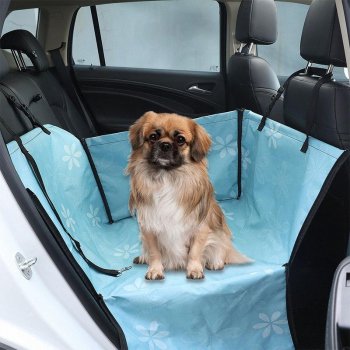
Prioritize a stable base, sturdy straps that anchor around the headrest/seat, and a washable liner. Look for non-slip material on the bottom and reinforced sides to help the seat hold its shape. If the seat includes a tether, use it only with a crash-tested harness (never a collar) to reduce neck injury risk.
For a deeper breakdown of fit, features, and cleaning—plus alternatives like full covers—see this dog car seat cover guide.
A dog car seat creates a contained space (often elevated) to help keep your dog in one spot, while a seat cover mainly protects upholstery and makes cleanup easier. Many owners use a cover for protection and a car seat for added containment on top.




Leave a comment