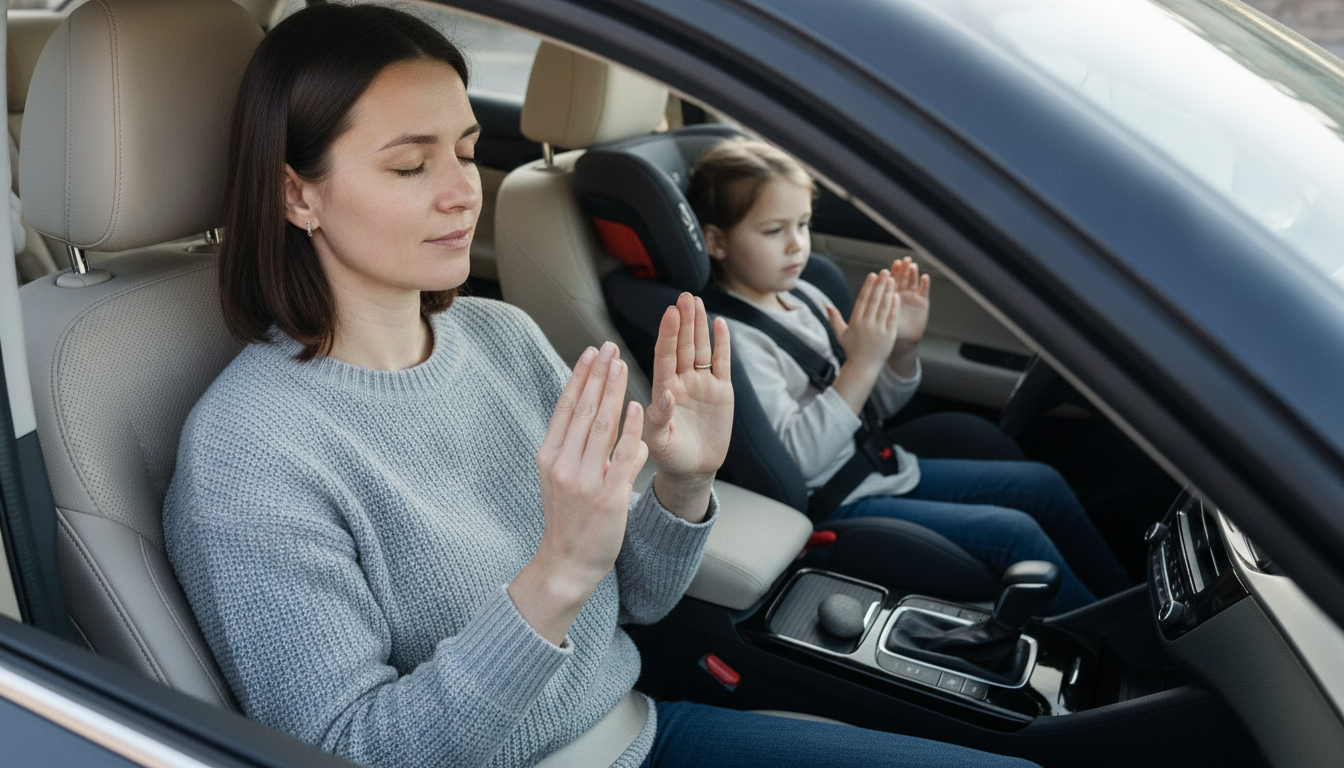
Anxious moments can hit fast: a tense conversation, a crowded room, an unexpected email, or a child melting down when you’re already stretched thin. Staying calm isn’t about forcing the anxiety away—it’s about giving your body and mind a simple path back to steadier ground.
When anxiety spikes, the nervous system often needs a physical cue of safety first. Drop your shoulders, unclench your jaw, and place both feet on the floor. Take one slow breath in through your nose and exhale longer than you inhale. That longer exhale helps signal “all clear” to your body.
A quiet label can reduce the swirl: “This is anxiety,” “I’m feeling overwhelmed,” or “My body is on high alert.” Keep it short and neutral. The goal is to create space between you and the feeling, not to debate it.
Choose one steady anchor for 10–20 seconds: the feeling of your hands, the pressure of your feet, or one sound in the room. If your thoughts yank you away, return to the anchor without criticism. That small repetition builds calm faster than trying to “think your way out.”
Anxiety grows when everything feels urgent. Shrink the moment: sip water, step into fresh air, loosen a tight grip, or write down the single next step you can take. Small actions restore a sense of control and reduce mental noise.
Calm is easier to access when you rehearse it during low-stress times. For a structured, parent-friendly approach, explore the reset routine in this guide: how to stay calm with a mindful parenting reset.
Do a quick check-in: notice what triggered you, what helped, and what you need next (food, water, a boundary, or a break). If the situation is ongoing, choose one supportive step—like asking for help or setting a time limit—so you don’t slide back into overwhelm.





Leave a comment