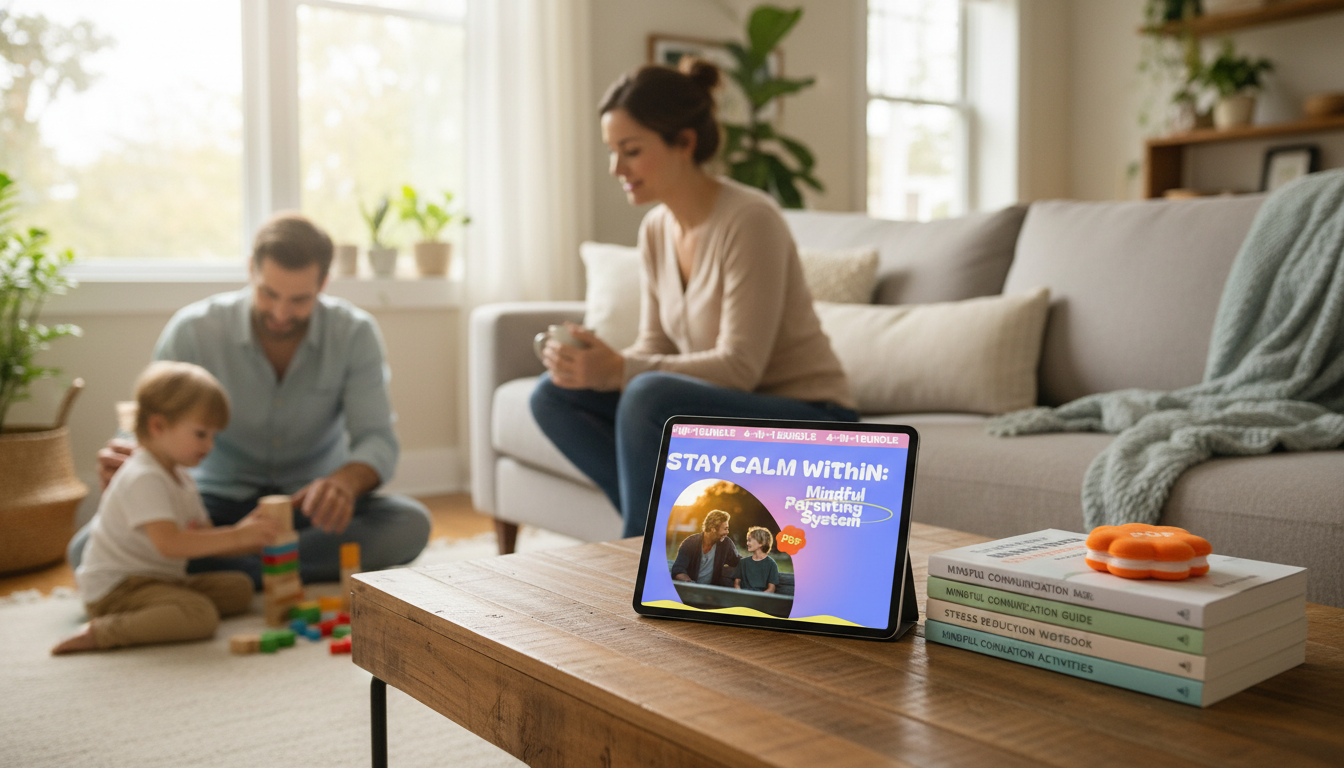
Parenting can push even the most patient adult into fight-or-flight. The Stay Calm Within Mindful Parenting System – 4-in-1 Bundle for Parents is built around a simple goal: help parents steady their nervous system, respond with intention, and build repeatable calm-down routines that work in real family moments—morning rush, sibling conflict, bedtime resistance, and public meltdowns.
Stress doesn’t just “live in the mind”—it shows up in the body, shaping tone, patience, and decision-making. The American Psychological Association explains how stress affects the body and can shift attention and behavior in powerful ways (APA: Stress effects on the body). That’s why a practical system for regulation—small steps you can repeat—often beats trying to “just stay calm” through willpower alone.
What “staying calm” looks like in real life
- Calm as a skill: pausing long enough to choose words, tone, and the next step—even if emotions are still present.
- Regulation before correction: settling the adult body first so guidance lands better and doesn’t escalate into a power struggle.
- Consistency over perfection: fewer blowups over time and faster repair after conflict (even when the day goes sideways).
- Calm boundaries: saying “no” without threats, long lectures, or turning every limit into a debate.
Who this 4-in-1 bundle is designed for
- Parents who feel easily triggered by whining, backtalk, defiance, or repetitive requests.
- Caregivers co-parenting with different styles and needing shared language and steps.
- Families wanting a clear, structured routine instead of relying on willpower.
- Parents who want practical tools alongside mindset work, not only theory.
How the system fits into a typical day
- Morning reset: a short routine to set the tone before the first conflict appears (especially helpful during rushed transitions).
- Micro-pause plan: a seconds-long pathway for heat-of-the-moment situations, when “take a break” isn’t realistic.
- Midday check-in: preventing irritability buildup from hunger, overstimulation, screen transitions, or too many decisions.
- Evening wind-down: lowering intensity to support calmer bedtime and easier reconnection.
- Repair ritual: a simple way to reduce shame, model accountability, and rebuild trust after hard moments.
For many families, co-regulation is the bridge between chaos and cooperation—especially with younger kids who borrow calm from the adult nervous system. Zero to Three offers helpful context on co-regulation and emotional development (Zero to Three).
What’s inside the 4-in-1 bundle (and how to use it)
This bundle is designed as a 4-part system: learn, practice, reflect, and apply. The fastest traction usually comes from choosing one routine to repeat for 7–14 days before stacking on more. Used consistently, it supports both “in the moment” regulation and longer-term habit building.
Suggested way to use each part of the bundle
| Bundle piece |
Best used when |
Simple starting plan |
| Core lessons (main program content) |
Building understanding and a repeatable approach |
Complete 1 short segment, then pick 1 tactic to practice the same day |
| Guided exercises (calm-down practice) |
Before triggers and after stressful interactions |
Do a 3–5 minute reset once daily; add a second reset on high-stress days |
| Worksheets or prompts (reflection + tracking) |
Spotting patterns in triggers, tone, and timing |
Track 1 trigger for a week (e.g., bedtime) and note what helped most |
| Quick-reference tools (checklists/cheat sheets) |
During conflict when thinking feels hard |
Keep one page accessible; follow the steps without improvising |
Core skills the system helps strengthen
- Early warning signs: noticing escalation signals like a tight chest, rushed speech, clenched jaw, or “I can’t take this” thoughts.
- Replacing automatic reactions: using a short, practiced pause so you respond rather than react.
- De-escalating language: brief, clear, calm limits that reduce power struggles.
- Emotion coaching: validating feelings without giving in to unsafe behavior or abandoning boundaries.
- Repair and reconnection: what to say and do after yelling or conflict so the relationship stays sturdy.
For additional evidence-based parenting guidance and examples of supportive responses, the CDC’s Essentials for Parenting provides clear, practical strategies (CDC: Essentials for Parenting).
Common parenting moments and calm responses to practice
- Public meltdown: prioritize safety and co-regulation first; problem-solving and consequences come later when the brain is back online.
- Sibling conflict: separate, regulate, then coach problem-solving in short steps (keep it simple and concrete).
- Screen transitions: prepare with a clear endpoint, expect emotions, and avoid endless negotiation once the limit is set.
- Bedtime battles: reduce stimulation, use predictable cues, and keep language minimal (calm repetition beats persuasion).
- Homework resistance: break tasks into tiny starts and praise effort/process, not just outcomes.
Getting started: a 7-day calm plan
What to consider before buying
Available picks from the store
FAQ
Is this bundle useful if yelling has become a habit?
Yes. Yelling often becomes a stress habit loop: trigger → body activation → fast reaction → guilt. Practicing a brief pause plus a consistent repair plan helps interrupt the loop, reduce frequency over time, and rebuild connection without spiraling into shame.
How much time does it take each day to see benefits?
Many parents notice changes with a few minutes a day: a 3–5 minute reset and a short reflection or quick check-in. Repeating one routine for 7–14 days typically makes it easier to access the skills during real conflict.
Can two caregivers use the system together?
Yes. Choose shared language for boundaries, agree on one common script you’ll both use, and do a simple weekly check-in to compare what’s working. Consistency between caregivers helps kids adapt faster and lowers everyone’s stress.
Recommended for you







Leave a comment