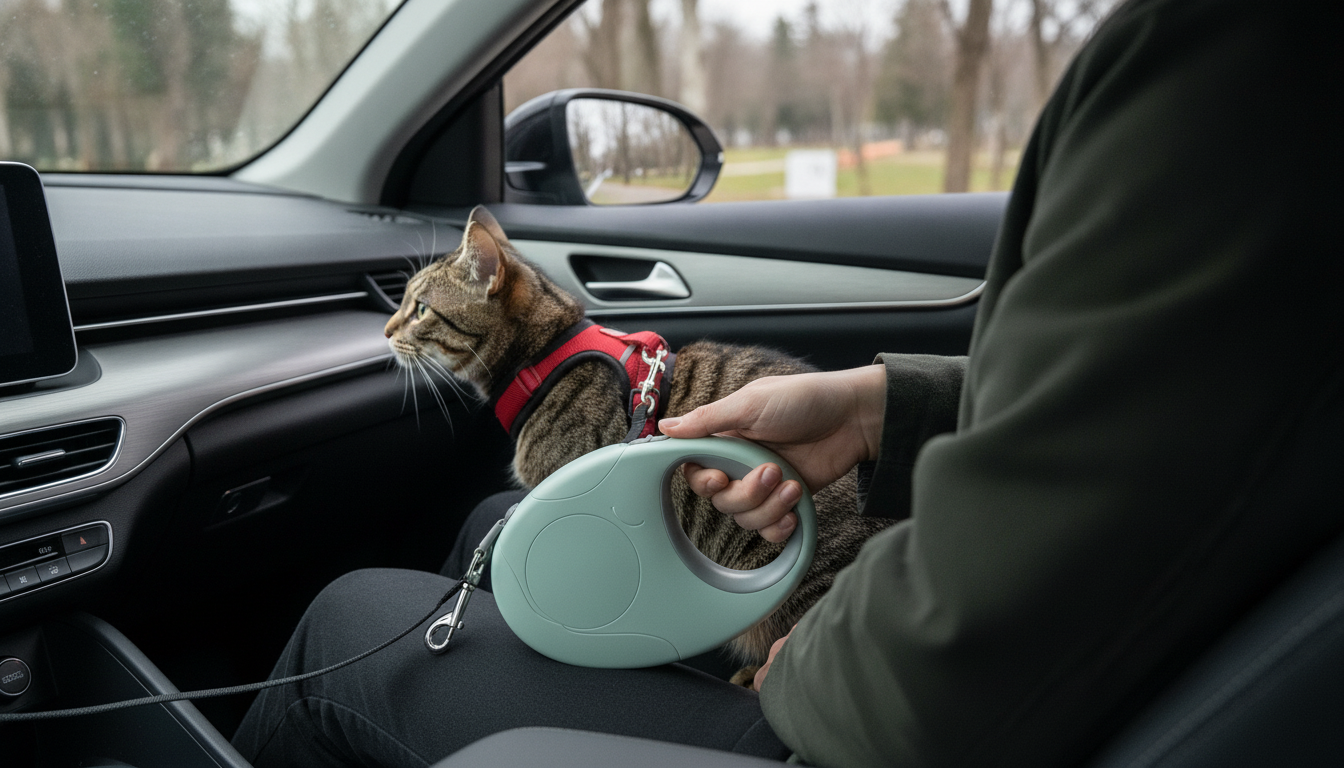
Retractable leashes can be okay for cats, but only in specific situations and with the right setup. Many cats do well with the added roaming distance, while others get startled by the line’s tension, the handle’s movement, or sudden “zip” sounds. The biggest factor is control: cats are quick, can dart under obstacles, and can climb—so the extra slack of a retractable leash can become a tangle or a safety issue if it’s not managed carefully.
A retractable leash tends to work best for calm, harness-trained cats in open, low-traffic areas like a quiet yard or an empty park corner. The adjustable length lets a cat sniff and explore without constant pulling. It’s also useful when the cat prefers to lead the pace rather than being guided closely.
Skip retractables in busy places (cars, dogs, crowds), near trees and shrubs where the line can wrap instantly, or with cats that panic and bolt. Thin cords can cause painful friction burns to hands or legs if a cat sprints and the line slides. If your cat is a climber, the leash can snag overhead and create a dangerous angle of pull on the harness.
Use a secure, escape-resistant cat harness (not a collar) and practice indoors first. Keep the leash shorter around obstacles, and lock the button before your cat reaches hazards. Hold the handle firmly, avoid wrapping the line around fingers, and never let kids operate the leash with a cat. Consider a shorter length if you’ll be walking in tighter spaces; longer lengths are better reserved for wide-open areas.
For a practical breakdown of leash lengths and how far your cat can safely roam, see the guide here: 3m vs 5m retractable leash guide for small dogs and cats.
3m is usually easier to manage around bushes, benches, and tight paths, while 5m can be better for open spaces where tangles are less likely. Choose based on where you’ll walk most, and prioritize control over maximum distance.





Leave a comment