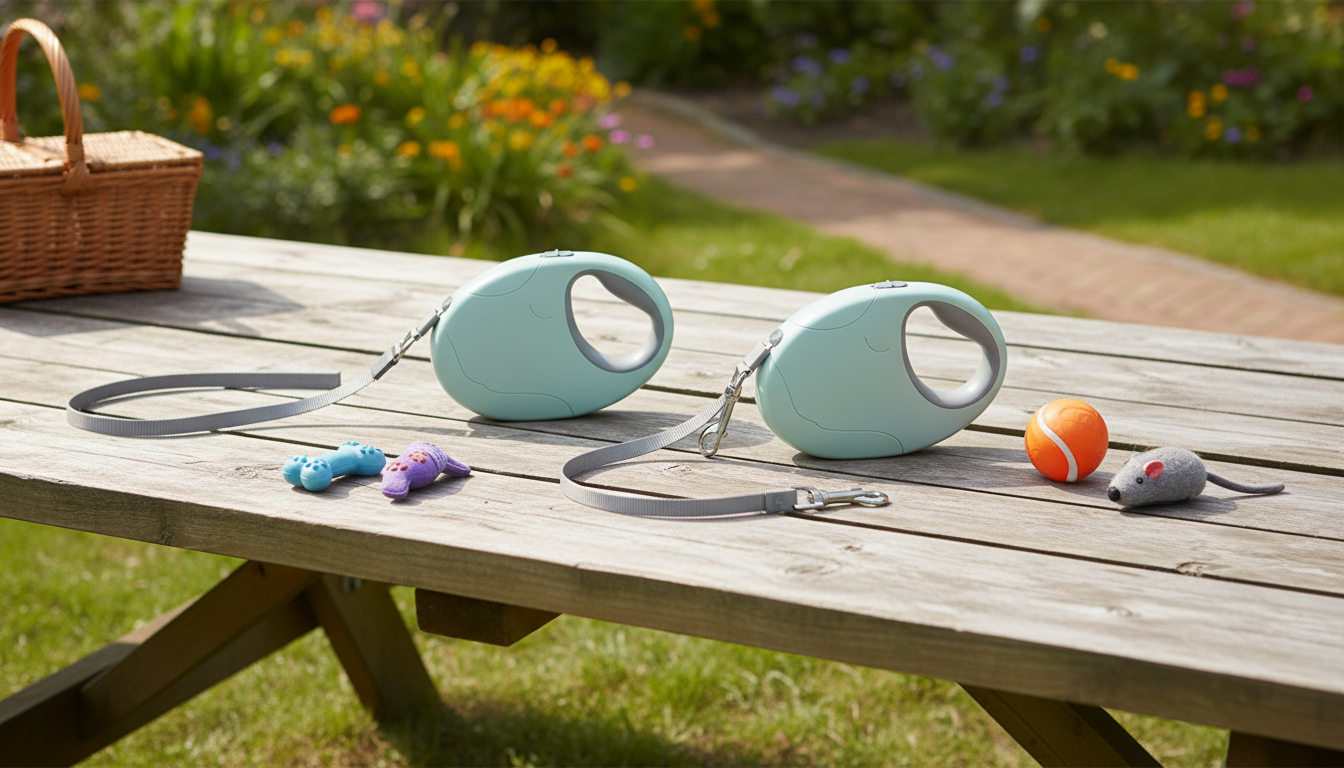
A retractable leash can make daily walks feel more natural by giving pets room to explore while keeping reliable control in hand. With the right length and a good lock/brake, a retractable lead supports calm neighborhood strolls, quick potty breaks, and supervised “sniff time” in open spaces. Below is a practical guide to choosing between 3M and 5M, what features matter most, and how to use a retractable leash safely with small and medium dogs—or cats on a harness.
Traditional fixed leads often leave owners constantly gathering slack or shortening up around distractions. A retractable leash changes the rhythm: the line automatically adjusts as your pet speeds up to sniff a mailbox, then slows to check in with you.
For everyday handling tips and pacing, the ASPCA’s guidance on walking routines is a helpful reference: https://www.aspca.org/pet-care/dog-care/dog-walking.
The best length depends less on your pet’s size and more on your walking environment and reaction time. A longer lead offers more freedom—but it also means more distance to manage when a bike passes, another dog appears, or your cat decides a shrub is suspicious.
| Scenario | 3M | 5M |
|---|---|---|
| Sidewalks, crossings, busy parks | Better control and fewer tangles | Only if space is wide and low-traffic |
| Open fields and wide trails | Works, but may feel limiting | More exploration distance |
| Training sessions (recall/loose-leash practice) | Easier to manage | Useful once basics are reliable |
| Cats on harness in quiet areas | Simpler handling close by | More range, needs careful supervision |
Not all retractable leashes feel the same in real use. The most important difference is how consistently the leash responds when you need it to stop, hold, and return smoothly—especially with small pets that can be startled by sudden tension.
Retractable leashes are safest when they’re used proactively—shortened before you “need” them shortened. Think of the lock as a tool you apply early, not an emergency button.
For broader safety context around interactions in shared environments, AVMA’s bite-prevention resource is worth reviewing: https://www.avma.org/resources-tools/pet-owners/dog-bite-prevention.
Cats often move in quick bursts—pause, sprint, freeze—so smooth handling matters even more. A retractable leash can work well for harness walks when the focus is on calm exploration, not distance.
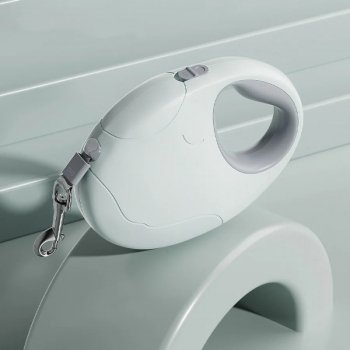
If daily walks vary between close-control moments and safe, open-area sniffing, having the option of 3M or 5M helps match the lead to the setting. The Retractable 3M & 5M Dog and Cat Leash for Small and Medium Pets is designed for small and medium companions, with length options that support both neighborhood routines and supervised exploring.
For longer walks—especially in warm weather—hydration is part of good leash etiquette. A compact option like the Portable Pet Water Bottle makes it easier to offer quick, clean sips without hunting for a shared fountain.
They can be safe when used correctly: keep the line short in crowded areas, avoid wrapping the cord around hands or legs, use a well-fitted harness for small pets, and check the lock and line condition before walks. Practicing recall and using the lock early also reduces sudden surprises.
Choose 3M for tighter control on sidewalks, near traffic, or in busy parks; choose 5M for open spaces where extra distance is safe and allowed. Also consider your pet’s pulling habits, training level, and local leash rules.
Retract proactively near poles, benches, and other pets, and guide your pet to pass obstacles on one consistent side. A “wait” cue before circling objects and steady, gradual retraction also helps prevent sudden wraps.





Leave a comment