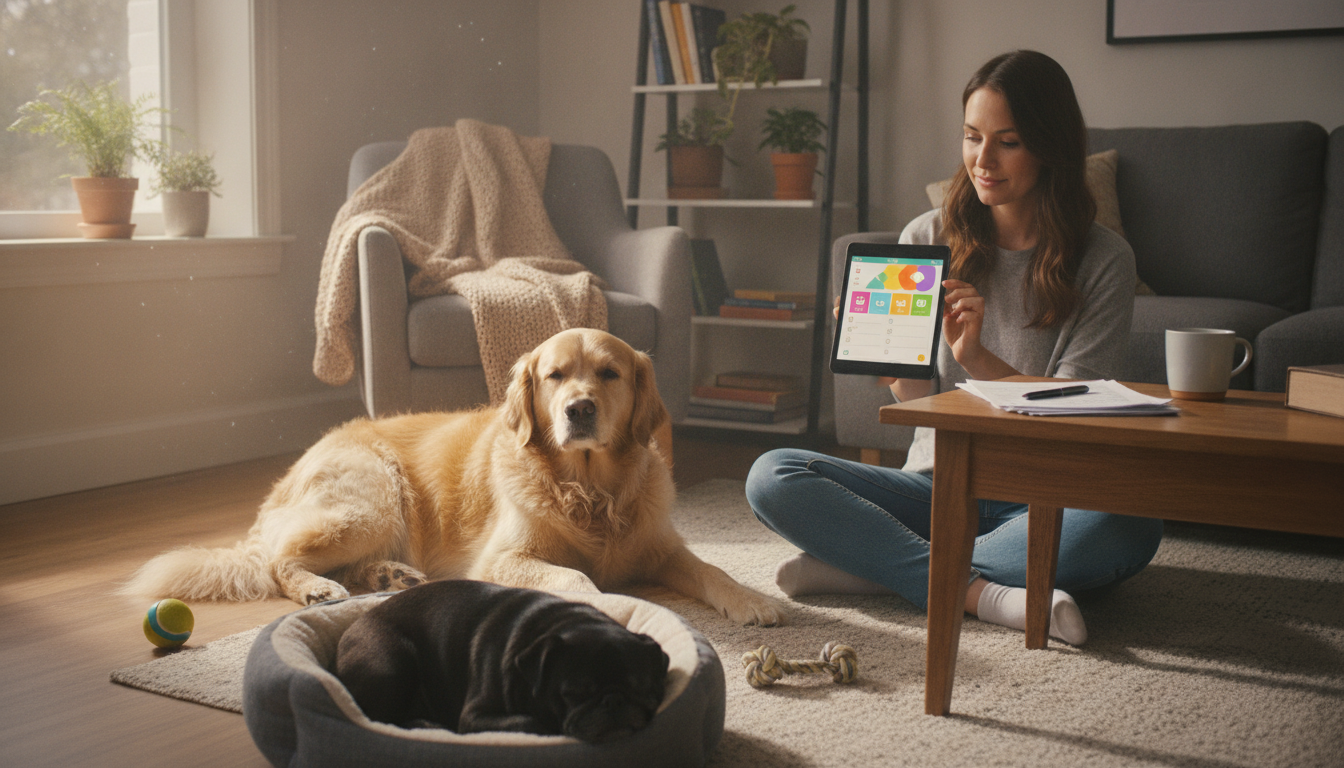
Anxiety in dogs can show up as pacing, barking, hiding, destruction, or clinginess—and it often gets worse when triggers repeat without a plan. A simple, repeatable checklist helps spot patterns, lower daily stress, and build calmer habits with consistency. Use the sections below to identify triggers, adjust the environment, practice short training routines, and know when professional help is needed.
Many dogs show subtle stress signals long before a full reaction. Catching these early makes it easier to intervene gently and prevent rehearsing panic.
Anxiety is rarely “out of nowhere.” It’s usually a mix of trigger exposure, temperament, and what the dog has learned will happen next.
For behavior guidance rooted in welfare and evidence-based practice, see the American Veterinary Society of Animal Behavior (AVSAB) position statements.
Think of anxiety reduction as building a “lower-stress default setting” so the dog has more resilience when something startling happens.
Management isn’t “giving in”—it’s preventing panic while you teach new skills.
| Trigger | What it may look like | Immediate support | Longer-term plan |
|---|---|---|---|
| Doorbell/visitors | Barking, pacing, jumping | Leash up, guide to safe zone, scatter treats | Teach stationing on a mat; practice door sounds at low volume |
| Storms/fireworks | Panting, hiding, trembling | Close curtains, white noise, stay in interior room | Desensitization with recordings; vet guidance for medication if severe |
| Being alone | Vocalizing, destruction near exits | Prevent rehearsal; provide safe confinement only if tolerated | Gradual alone-time training with tiny increments and neutral departures |
| Car rides | Drooling, whining, refusing to enter | Short trips paired with high-value rewards | Counterconditioning: car = treat station; start with sitting in parked car |
| Handling/grooming | Pulling away, stiffening, snapping | Stop, give space, reward calm | Cooperative care training; desensitization to touch/tools |
For separation-specific context, the American Kennel Club’s separation anxiety overview is a helpful starting point, alongside support from a qualified professional.
More background on fear and phobias can be found via the ASPCA’s guide to fear, anxiety, and phobias in dogs.
Printable checklist and digital guide to reduce anxiety in dogs
For owners who also want a structured calm-down framework at home, consider Stay Calm Within Mindful Parenting System – 4-in-1 Bundle for Parents.
Timelines vary by trigger severity and how long the anxiety has been rehearsed. Mild cases may improve in a few weeks with consistent routines and short training sessions, while panic-level cases often take months and may improve faster with veterinary support. Tracking intensity and recovery time helps you see progress even when setbacks happen.
Start with management (safe interior room, curtains closed, white noise) and practice training well before storm season. For dogs who panic, ask a veterinarian about safe medication or supplement options and proper dosing. Avoid giving human medications unless a veterinarian specifically directs it.
Crating helps only if the dog is already relaxed in the crate. If confinement increases panic (scratching, drooling, frantic escape attempts), use safer alternatives and focus on gradual alone-time training in tiny increments to prevent rehearsing distress.





Leave a comment