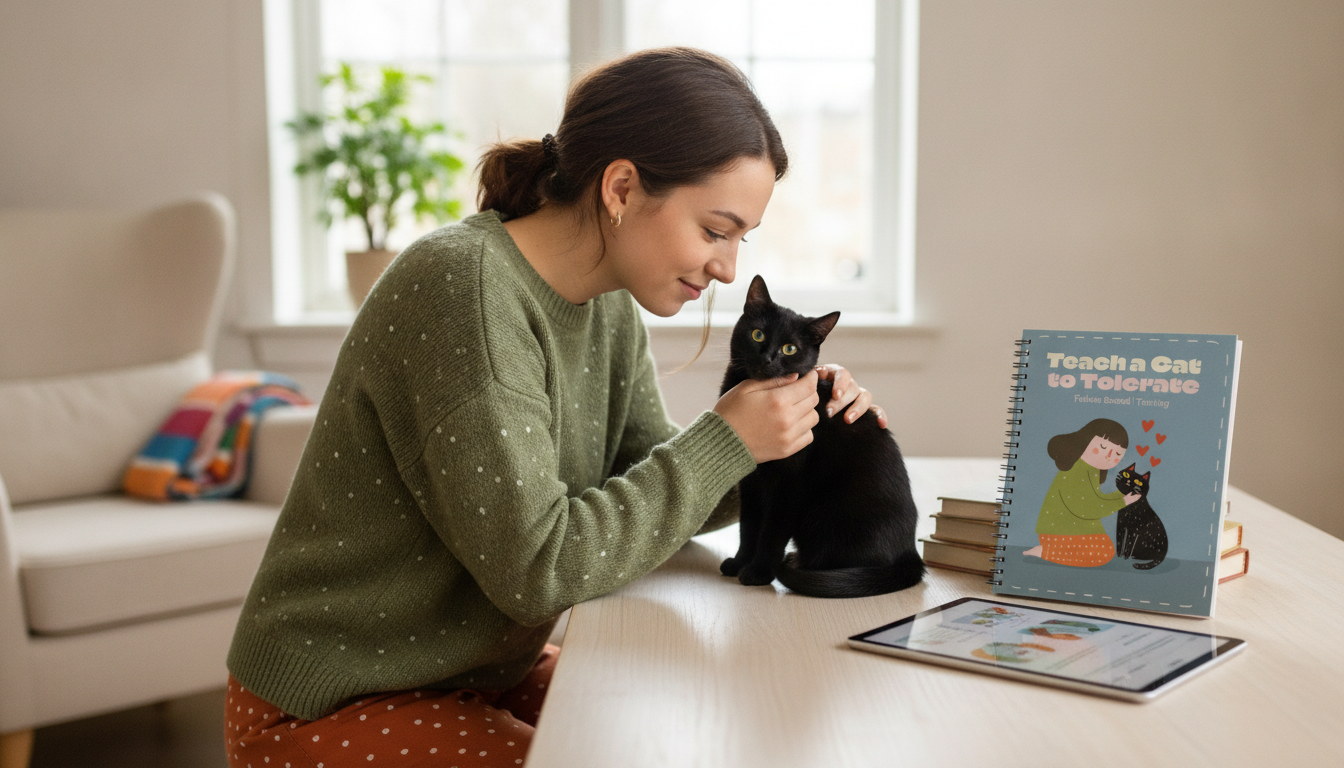
Gentle handling is a learnable skill for most cats when it’s taught as a predictable, consent-based routine. Instead of waiting until you “have to” clip nails, brush a mat, or get into a carrier, you can break each handling task into tiny steps that feel safe and rewarding. The result is a cat who stays calmer and a human who can care for them more confidently—at home and at the vet.
Gentle handling isn’t about pinning a cat down until they “give up.” Success looks like relaxed tolerance and, ideally, cooperative participation—your cat stays soft in the body, can choose to continue, and recovers quickly after each repetition.
Practical handling goals that make everyday life easier include: petting, lifting, brief holds, brushing, tooth checks, ear looks, paw and claw touch, collar/harness acceptance, and carrier entry.
A consent-based approach protects trust: your cat can opt in (stay on the station, lean into touch) or opt out (step away). When you respect the “no,” you prevent escalation and keep training progress moving forward. Rushing tends to backfire because stress can stack across the day; repeated uncomfortable experiences can create sensitization and avoidance learning, making future handling harder.
Start in a low-distraction spot at a predictable time—often after meals or after a short play session when your cat is settling. Keep sessions brief (30–90 seconds), with frequent breaks, and end while your cat is still comfortable.
Use high-value reinforcers. Many cats work best for lickable treats or tiny meat treats; others prefer a favorite toy or a few seconds of cheek rubs. Choose what reliably makes your cat’s body soften.
Create a “station,” such as a mat, folded towel, or stable perch on a cat tree. The station becomes a clear signal that predictable, reward-heavy practice is about to happen—and it gives your cat a secure surface to stand or sit on.
Before you use tools (soft brush, towel, nail clippers, toothbrush/finger brush), present them as neutral objects. Let your cat see them, then deliver a treat. Tools should predict good things, not surprise handling.
Look for relaxed signs: soft eyes, normal breathing, loose body, ears neutral, and a tail that’s still or gently moving. These are green lights.
| Handling Skill | Beginner Step | Intermediate Step | Ready-to-Use Goal | When to Back Up |
|---|---|---|---|---|
| Paw handling | Touch shoulder, then briefly touch leg | Hold paw 1–2 seconds, release | Press each toe briefly; clip 1 nail per session | Cat pulls paw away, tail flicks, freezes |
| Brushing | Show brush → treat | 1 brush stroke on back → treat | Brush 10–20 seconds with pauses | Skin twitching, moving away |
| Lifting | Hand under chest without lift | Lift 1 inch for 1 second → treat | Pick up, hold 2–3 seconds, set down calmly | Struggling, tense body, wide eyes |
| Mouth/teeth check | Touch cheek → treat | Lift lip 1 second → treat | Brief look at gumline and teeth | Head jerks away, growl, avoidance |
| Carrier comfort | Carrier open as furniture | Treat tossed near/inside | Cat enters on cue and relaxes | Avoidance of room/carrier |
For ears, eyes, and mouth, begin with 1–2 seconds, reward, and end. Gradually add duration. For body-language guidance during these checks, the International Cat Care cat body language resource is a helpful reference.
During training weeks, reduce other stressors when possible—loud noises, conflict with other pets, unpredictable guests—so your cat has enough emotional bandwidth to learn. The American Association of Feline Practitioners (AAFP) guidelines offer a strong foundation for low-stress handling and feline-friendly care.
If consistency is the hardest part, a ready-to-print plan can make progress easier to track and simpler to share across family members. Teaching Your Cat to Love Gentle Handling (printable guide and trust-building eBook) is designed for short sessions, with clear handling ladders, body-language reminders, and quick routines for paws, brushing, lifting, and carrier comfort.
For households where stress management is part of the bigger picture, Stay Calm Within Mindful Parenting System – 4-in-1 Bundle for Parents can be a useful companion for building steadier routines and calmer responses during daily care tasks.
Some cats improve in a few days, but many need a few weeks of micro-sessions to build real comfort. Timing depends on your cat’s history, whether pain is involved, how motivating the rewards are, and how consistently you practice while backing up when stress shows.
End the session immediately and identify which exact step triggered the reaction, then restart at an easier level next time. Increase reward value, keep sessions shorter, avoid punishment, and consult a vet or qualified behavior professional if fear or aggression is frequent or intense.
Yes—older cats often do well with slower pacing, shorter sessions, and extra predictability. It’s smart to screen for arthritis or dental discomfort first and to use fully supportive lifts and very brief handling reps.






Leave a comment