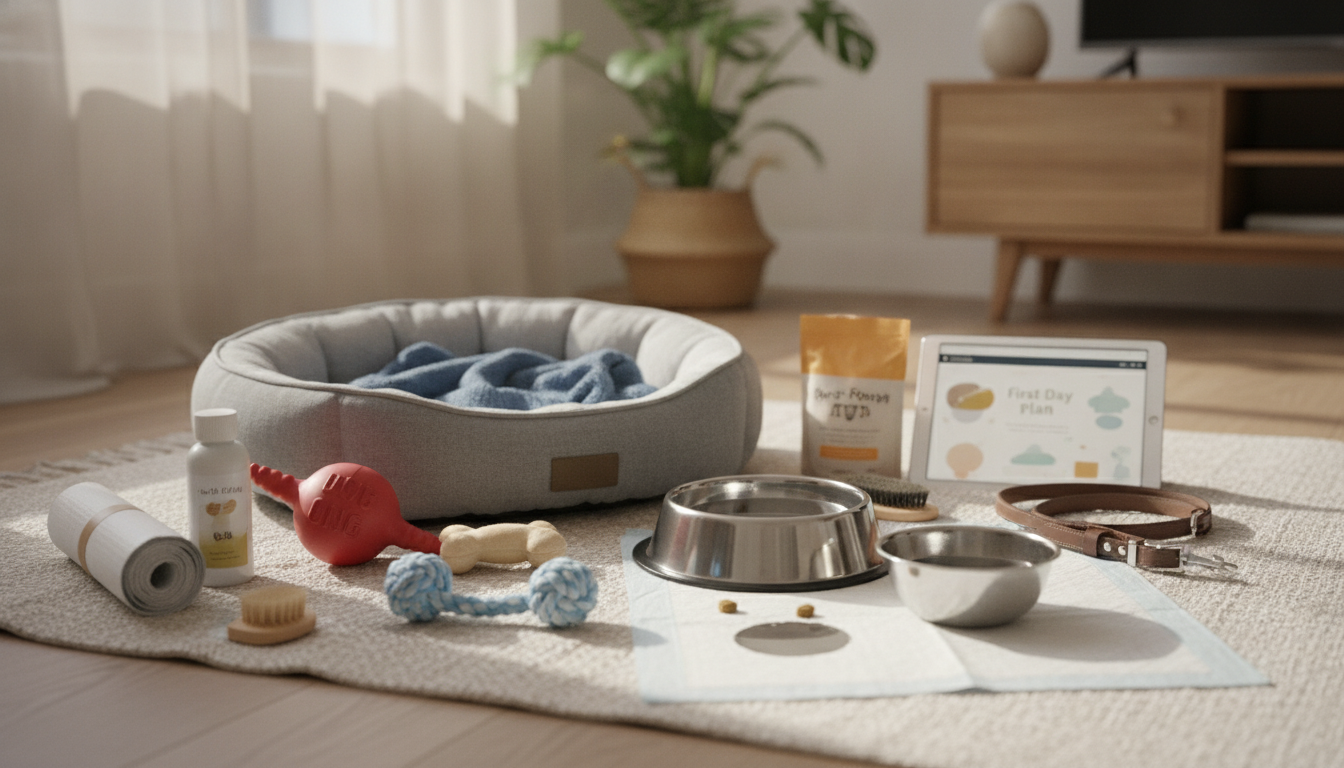
The first day with a new puppy sets the tone for house training, bonding, and stress levels—for the puppy and the people. A simple plan (what to buy, where to put it, what to do in the first hours, and what to avoid) can prevent common headaches like accidents, sleepless nights, and an overstimulated pup who can’t settle. Use the steps below as a practical, calm 24-hour roadmap for day one and night one.
A small amount of preparation reduces confusion and keeps your puppy from learning bad habits on day one.
| Essential | Purpose | When you’ll use it |
|---|---|---|
| Crate or pen | Safe rest space and management tool | Immediately on arrival; naps; nighttime |
| Bed/blanket | Comfort and warmth | Naps and nighttime (washable preferred) |
| Food + treats | Stable digestion and training rewards | First meal; short training moments |
| Bowls (food/water) | Hydration and routine | Right away; scheduled meals |
| Leash + collar/harness | Safe potty trips and handling | First potty break; introductions |
| Chew toys | Redirect chewing and soothe stress | During awake time; when nipping starts |
| Enzymatic cleaner | Removes odor to reduce repeat accidents | After any indoor accident |
| Pee pads (optional) | Backup for limited access to outdoors | If outdoor access is delayed/limited |
| Grooming basics | Gentle handling practice | Brief session after settling in |
If multiple people will share puppy duties, a single written plan prevents mixed signals. A quick, printable reference like A Guide to First Day Dog Essentials | Printable Pet Owner’s Handbook can help everyone stick to the same feeding, potty, and sleep rhythm—especially during the first night.
Day one often looks “boring” compared to expectations—and that’s good. Puppies commonly need 18–20 hours of sleep in a day, with short awake windows.
If the household is already exhausted (kids, travel day, new schedule), having a calmer adult helps the puppy regulate faster. For families who want a structured way to stay steady under stress, consider Stay Calm Within Mindful Parenting System – 4-in-1 Bundle for Parents to support consistent, low-drama routines during the adjustment week.
For additional puppy care basics and safety guidance, consult the American Veterinary Medical Association (AVMA) puppy care resources and the American Kennel Club (AKC) training library.
If you want a ready-to-print plan you can post on the fridge, A Guide to First Day Dog Essentials | Printable Pet Owner’s Handbook is a simple way to keep everyone aligned during the first 24 hours.
Go straight to your chosen potty spot and reward immediately after your puppy goes. Then keep things calm: offer water, limit introductions, and let the puppy decompress in one safe “home base” area before expanding access to the rest of the home.
Take your puppy out after waking, after eating or drinking, after play, and at least every 1–2 hours for very young puppies. When you can’t supervise, use a crate or pen to prevent wandering accidents and reinforce the potty routine.
Crying is common because the puppy is adjusting to a new place and being separated from familiar littermates. Keep the crate close to where you sleep, follow a quiet potty-check routine if needed, and avoid turning crate crying into attention or playtime.







Leave a comment