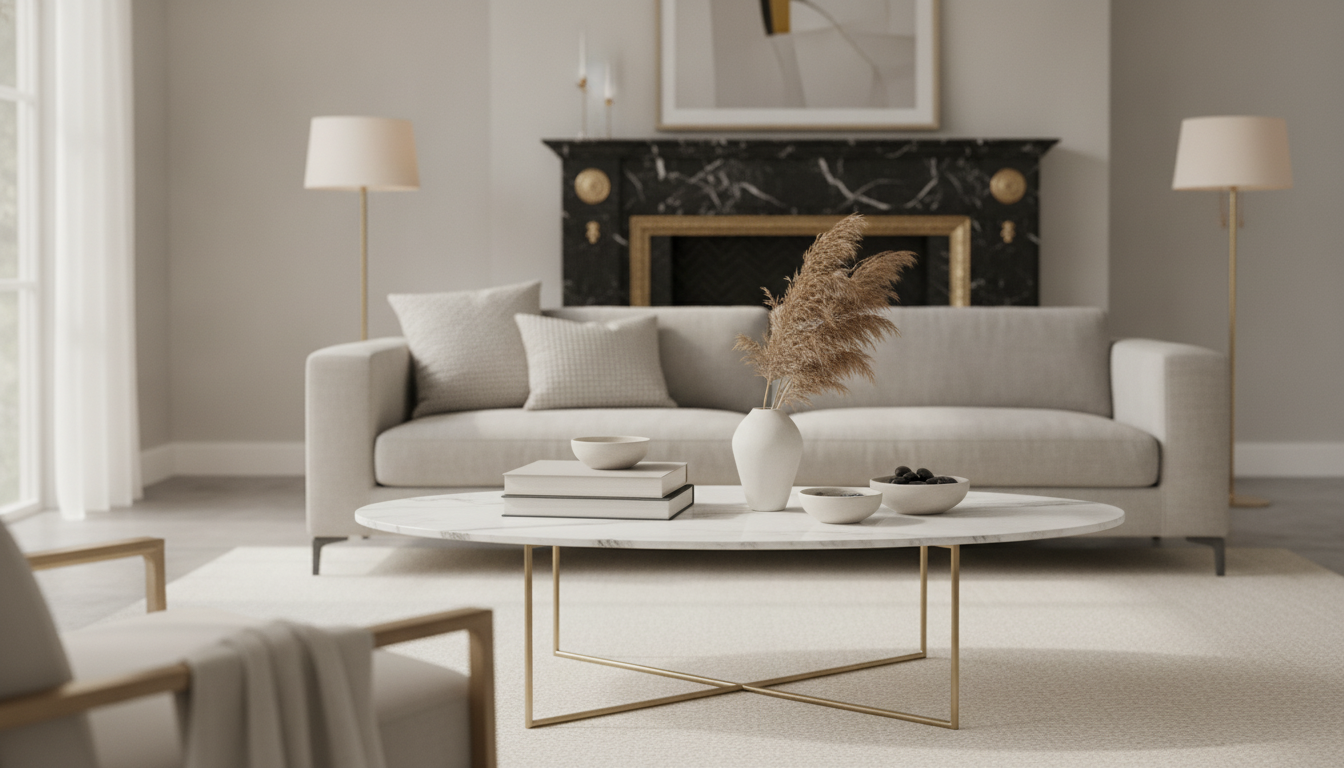
An oval coffee table can anchor a living room without feeling boxy or crowded—but it’s also easy for it to become a catch-all. A quick reset works best when it’s checklist-driven: start clean, set a purpose, then style with proportion, layering, and everyday function so the surface looks intentional and stays usable. For more guidance, see The Best!.
Before you style, remove the visual “noise.” A fresh start makes your table’s finish (wood grain, stone veining, lacquer sheen) read as a design choice—not an afterthought. For further reading, see 3.
If the room constantly feels messy, it’s usually not a decor problem—it’s a “no assigned home” problem. Give the basics a designated spot (tray, catchall, lidded box), and you’ll instantly reduce clutter creep.
Ovals look effortless when the styling supports their curves. The goal is to keep the silhouette open while still creating a clear focal point.
| Element | Suggested size/height | What it does | Common mistake |
|---|---|---|---|
| Tray (or shallow bowl) | About 1/3 to 1/2 of the table’s surface; low profile | Creates structure and corrals small items | Tray that’s too big leaves no usable space |
| Stacked books | 2–4 books; medium height | Adds height and a design “platform” | Too many books becomes clutter or feels staged |
| Statement accent (vase/candle) | One taller piece, kept stable | Creates a focal point and vertical interest | Tall piece blocks sightlines across seating |
| Functional item (remote box/coasters) | Small and intentional | Supports daily living without visual mess | Multiple mismatched holders competing for attention |
When a coffee table looks “styled,” it’s usually because it has a foundation that makes the rest feel organized. For an oval, aim for a layout that feels balanced but not overly symmetrical.
Practical tip: if your anchor is a candle, keep matches or a lighter tucked into the tray. If your anchor is greenery, choose a vessel that won’t tip when someone reaches for a coaster.
Oval tables shine when the styling mixes materials and repeats subtle cues from the room. Think of the table as the “bridge” between your sofa textiles, nearby lighting, and wall decor.
For more room-wide styling guidance, browse inspiration from Architectural Digest and approachable decor how-tos at The Spruce.
A good starting range is 5–9 items total, depending on the table’s size. Group pieces into 2–3 clusters (like tray + books + one accent) and always leave at least one open zone for daily use.
Keep the tallest piece low enough to preserve sightlines across the seating area—often around 12–16 inches, depending on sofa height and distance. If you want more height, choose airy greenery or a sculptural piece that doesn’t feel visually blocking.
Use sturdy, shatter-resistant decor, fewer loose small objects, and a tray or lidded box to contain essentials. Skip fragile glass and top-heavy vases, and prioritize rounded, stable pieces that still look polished.





Leave a comment