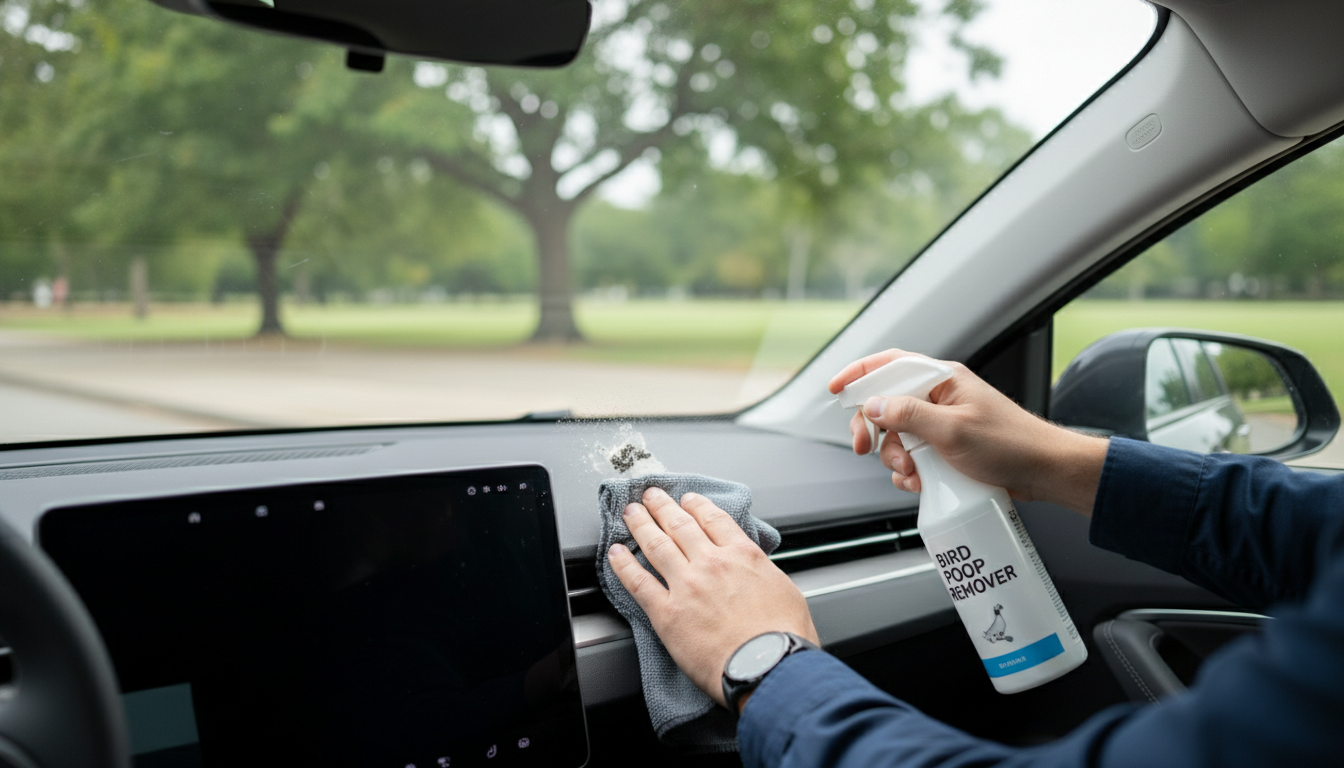
Bird droppings can etch clear coat fast because they’re acidic and often gritty. The safest approach is to soften the mess first, lift it gently, then clean and protect the area—without rubbing dry contamination across the paint.
Move the car into shade if possible and let the panel cool. Heat bakes droppings onto the surface and speeds up etching, making removal harder and increasing the chance of dull spots.
Lay a microfiber towel over the spot and saturate it with water or a quick detailer. Let it dwell for 3–5 minutes so the dropping softens. If it’s thick, re-wet and extend dwell time rather than pressing harder.
Using a clean microfiber towel, wipe in one direction with light pressure, flipping to a clean section after each pass. Avoid circular scrubbing. If you feel grit, stop and re-soak to prevent micro-scratches.
Follow up with a pH-balanced car shampoo and water to remove any leftover film. Rinse well and dry with a separate microfiber drying towel to avoid water spots.
If you notice a faint outline or hazy patch, the paint may be lightly etched. Applying a wax, sealant, or spray protectant can help mask minor marks and add a sacrificial layer. For more detail and product options, see the full guide: https://splendyn.com/how-to-remove-bird-poop-from-car-without-damaging-paint/.
Don’t use dry paper towels, abrasive pads, or household cleaners like glass cleaner with ammonia or strong degreasers. Also avoid scraping with fingernails or plastic cards unless the surface is fully softened and lubricated.
Yes. Depending on heat, sunlight, and how acidic the dropping is, etching can begin in hours and become noticeable by the next day, especially on dark paint.





Leave a comment