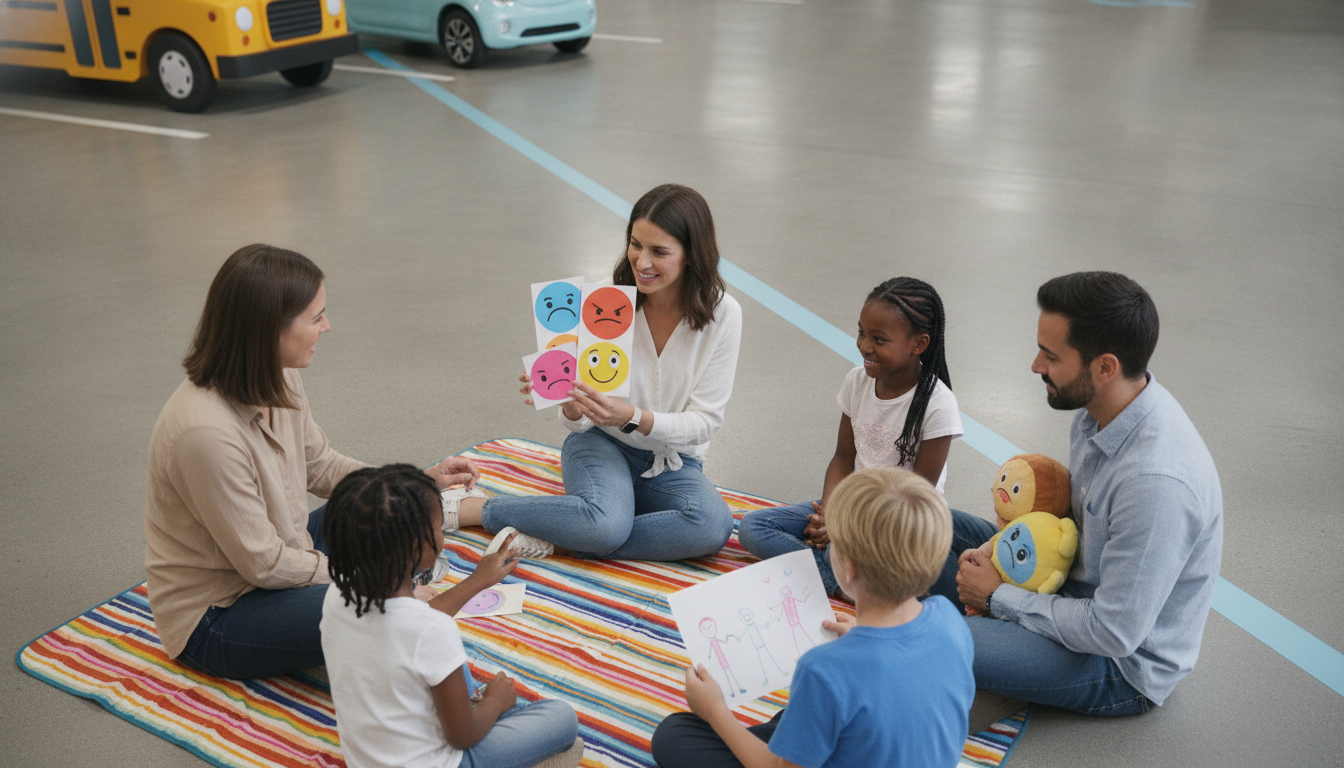
Teaching emotional intelligence (EQ) starts with making feelings visible, nameable, and manageable in everyday moments. Kids learn EQ best through short, repeated interactions—especially when adults model calm behavior, curiosity, and repair after conflict. The goal isn’t to prevent big emotions; it’s to help children understand what they feel and choose what to do next.
Use simple labels like “frustrated,” “disappointed,” “excited,” and “worried” during real situations: “You look frustrated that the blocks fell.” Naming emotions reduces confusion and builds a vocabulary kids can use instead of acting out.
Validation sounds like, “It makes sense you’re angry,” while boundaries sound like, “It’s not okay to hit.” This pairing teaches that all feelings are allowed, but not all behaviors are. Keep it brief and consistent.
Give your child a repeatable tool for intense moments: stop, breathe, and choose. Try “smell the flower, blow the candle” breathing, a sip of water, or a quiet corner. Practice when they’re calm so it’s available when they’re not.
Ask questions while reading or watching shows: “How do you think they feel? What might help?” Role-play sharing, apologizing, and problem-solving with toys. This helps kids recognize emotions in others and consider different perspectives.
When you lose patience, show what a healthy reset looks like: “I snapped. I’m sorry. I’m going to take a breath and try again.” Kids learn more from how adults recover than from adults being perfect.
For more practical examples and age-appropriate strategies, visit the full guide: https://splendyn.com/how-to-teach-emotional-intelligence-to-a-child/.
Common signs include naming feelings, calming down faster after upset, showing empathy, and trying to solve problems with words. You may also notice fewer explosive reactions and more willingness to compromise.







Leave a comment