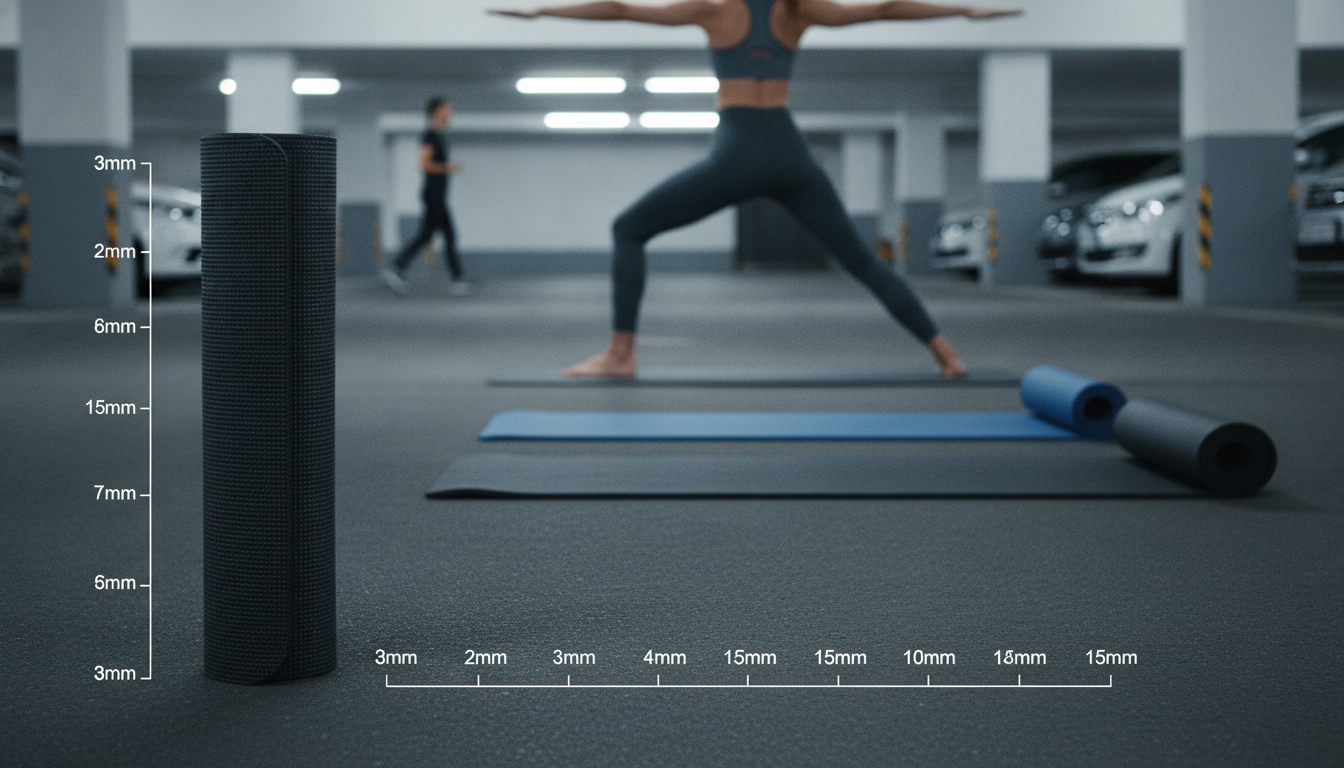
The best thickness of an exercise mat (in mm) depends on what you’re doing and how much cushioning your joints need. For most people and most home workouts, a 6 mm exercise mat is the most balanced choice because it cushions knees and elbows without feeling overly soft or unstable.
3–4 mm: Best for yoga styles where stability and grip matter most (balance poses, transitions). It’s also easy to roll and carry, but offers minimal padding on hard floors.
5–6 mm: The most versatile “all-purpose” range for fitness routines, Pilates basics, light strength training, stretching, and mixed workouts. This range helps reduce pressure on knees while still feeling grounded.
8–10 mm: Better for people with sensitive joints, hardwood/concrete floors, or workouts with more kneeling and floor contact. The tradeoff is less stability for standing balance work and sometimes more “sink.”
12–15 mm: Best for maximum cushioning (rehab-style floor work, very tender knees, or extra-cushioned comfort). These mats can feel too spongy for yoga and may shift more during dynamic moves.
If your main focus is yoga: Choose 4–6 mm for a steadier base. Go thinner if you prioritize balance; go closer to 6 mm if you want a bit more comfort.
If you do HIIT, bodyweight training, or floor core work: Choose 6–10 mm to protect pressure points during planks, mountain climbers, and kneeling moves.
If you lift weights at home: Choose 6–8 mm for general use. If you’re placing heavy dumbbells on the mat, consider a dedicated lifting platform or thicker protective flooring rather than relying on extra-thick mats alone.
For a deeper breakdown by activity and comfort level, see the full guide here: https://splendyn.com/what-is-the-best-thickness-of-exercise-mat-in-mm/.
It can be for many yoga styles because thicker mats may feel less stable in balance poses. If comfort is the priority (like for knees), 10 mm can work, but many people prefer 4–6 mm for better grounding.




Leave a comment