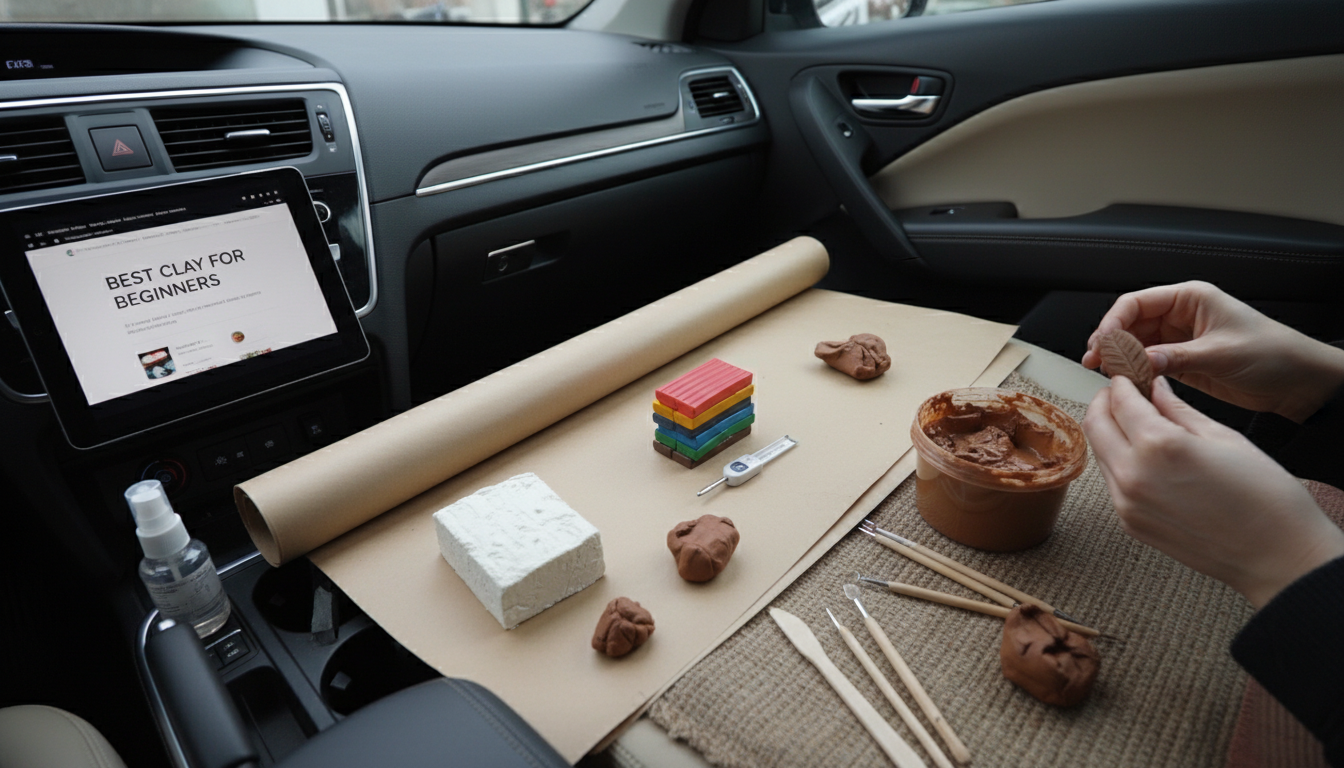
The best clay for beginners depends on what you want to make, how you plan to finish it, and whether you have access to an oven. If the goal is quick, low-pressure crafting with minimal tools, air-dry clay is usually the easiest starting point. If you want durable, detailed miniatures or jewelry, polymer clay is often the better “grow-with-you” option. If you’re practicing shapes or working with kids and want something reusable, modeling clay is the simplest and most forgiving.
Air-dry clay is beginner-friendly because it hardens on its own—no baking required. It’s great for small bowls, ornaments, wall hangings, and kid-friendly crafts. The tradeoff is that it can crack if it dries too fast or if pieces are thick. It’s also typically less strong than polymer after curing, so it’s better for display items than things that take daily wear.
Polymer clay stays workable until you bake it, which means you can take your time refining details. It’s ideal for earrings, charms, figurines, and anything that benefits from crisp edges and strong results. You do need an oven (or dedicated toaster oven) and a little practice with baking temperatures, but beginners often love it because mistakes can be fixed before curing.
Traditional modeling clay (often oil-based) doesn’t air-dry and usually isn’t meant to be baked to harden. That makes it perfect for learning basic sculpting, testing ideas, and reshaping over and over. It’s not the top choice for finished keepsakes, but it’s excellent for hands-on skill building and casual crafting sessions.
If you want a finished piece without extra equipment, start with air-dry clay. If you want long-lasting, wearable, or highly detailed items, start with polymer clay. If you mainly want to practice sculpting techniques without committing to a final result, choose modeling clay.
For a deeper comparison, project ideas, and beginner tips, visit the full guide here: Which type of clay is best for beginners: air-dry, polymer, or modeling clay?.
Acrylic roller or brayer, a craft knife, a few shaping tools, and sandpaper cover most basics. For polymer clay, add a baking surface and an oven thermometer for more reliable curing.





Leave a comment