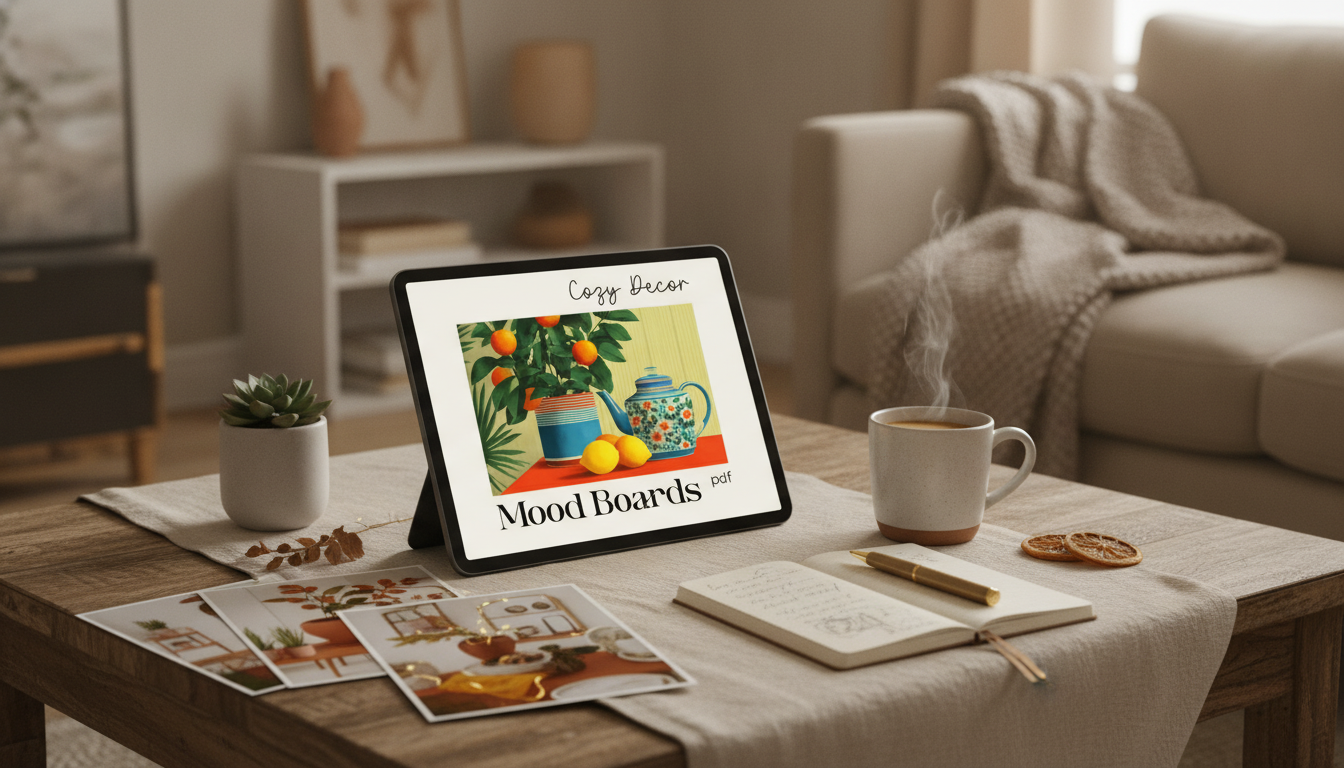
A cozy space starts with clear visual direction. A mood board turns scattered inspiration into a focused plan for colors, textures, lighting, and tabletop details—without overbuying or second-guessing. This guide breaks down a practical, repeatable process for using AI-generated visuals alongside a simple checklist to build cozy tablescapes and room styling concepts that feel intentional and warm. For more guidance, see Free Online Mood Board Maker – Design, Plan & Inspire – Planner 5D.
Cozy isn’t a single style—it’s a feeling created by repeated, consistent choices. A strong cozy mood board does less “decorating” and more “editing,” so every element supports comfort.
If cozy decorating tends to spiral into “too many options,” a checklist keeps the process grounded. The AI-Made Cozy Decor Mood Boards Checklist (Digital Download) is built to move from concept to a set table without guesswork.
Cozy results come from a consistent sequence. The goal is to use AI visuals for quick exploration, then narrow down to a small, shoppable plan.
Choose the occasion (weeknight dinner, brunch, holiday), the room style (modern rustic, classic, minimalist), and the mood (soft, candlelit, airy-cozy). This prevents the board from drifting into mixed messages.
Start with neutrals, then add one “comfort color” that carries emotional warmth—cinnamon, sage, terracotta, deep cream, or smoky amber. Keep contrast gentle so the table reads calm rather than busy.
Create 6–12 variations. Look for repeatable shapes, consistent color temperature, and materials you can actually buy (linen runners, stoneware plates, clear glass). The best images are rarely the most elaborate—they’re the most doable.
Keep only 3–5 images that clearly share the same lighting and texture cues. Add quick notes beside each: runner fabric, plate finish, candle height, glass color, greenery type, and any “no” items to avoid.
Divide everything into: shop, thrift, DIY, and already-owned substitutes. A “cozy” mood board often succeeds because you repeat a few materials (linen + ceramic + wood) rather than chasing novelty.
Place the largest objects first (runner, centerpiece), then mid-scale items (candlesticks, serving pieces), then small accents (napkin rings, place cards). Stop earlier than you think you should; cozy usually improves with restraint.
Use this guide to choose a direction fast. When uncertain, reduce shine and increase softness: matte ceramics, linen napkins, and warm lighting do most of the work. Keep centerpiece height conversation-friendly—low and sprawling, or tall-and-thin with open sightlines.
| Vibe | Palette direction | Key textures | Centerpiece idea | Lighting cue |
|---|---|---|---|---|
| Candlelit Rustic | Cream, chestnut, charcoal | Raw wood, linen, stoneware | Dried florals + taper candles on a wood board | Clusters of warm tapers |
| Soft Minimal | Warm white, sand, soft black | Matte ceramic, cotton, brushed metal | Single sculptural vase + simple stems | One statement lamp + tealights |
| Autumn Cozy | Oat, terracotta, deep green | Wool, amber glass, woven placemats | Mini gourds + eucalyptus + amber bud vases | Warm string lights nearby |
| Winter Glow | Ivory, pine, brass | Velvet ribbon, evergreen, ribbed glass | Evergreen runner + brass candlesticks | Dimmed warm bulbs + candles |
| Garden Comfort | Cream, sage, dusty blush | Linen, wicker, clear glass | Loose greenery + mismatched bud vases | Daylight + a few votives |
For broader home presentation principles—especially when styling a dining space for guests—resources from the International Association of Home Staging Professionals (IAHSP) can be a helpful reference point.
Use an AI image generator to create visuals, then organize your favorites in a design board or even a simple notes app. The key is sticking to one warm palette, a few repeatable textures, and consistent lighting across the images.
About 5–9 images is usually enough: one for palette, a couple for textures, one centerpiece direction, one place setting, and one lighting reference. Fewer images often creates a more cohesive result.
Break the board into categories (linens, vessels, candles, greenery, serving pieces), confirm sizes against your table, and note substitutes you already own. Buy the hero item first, then fill in supporting pieces only as needed.




Leave a comment