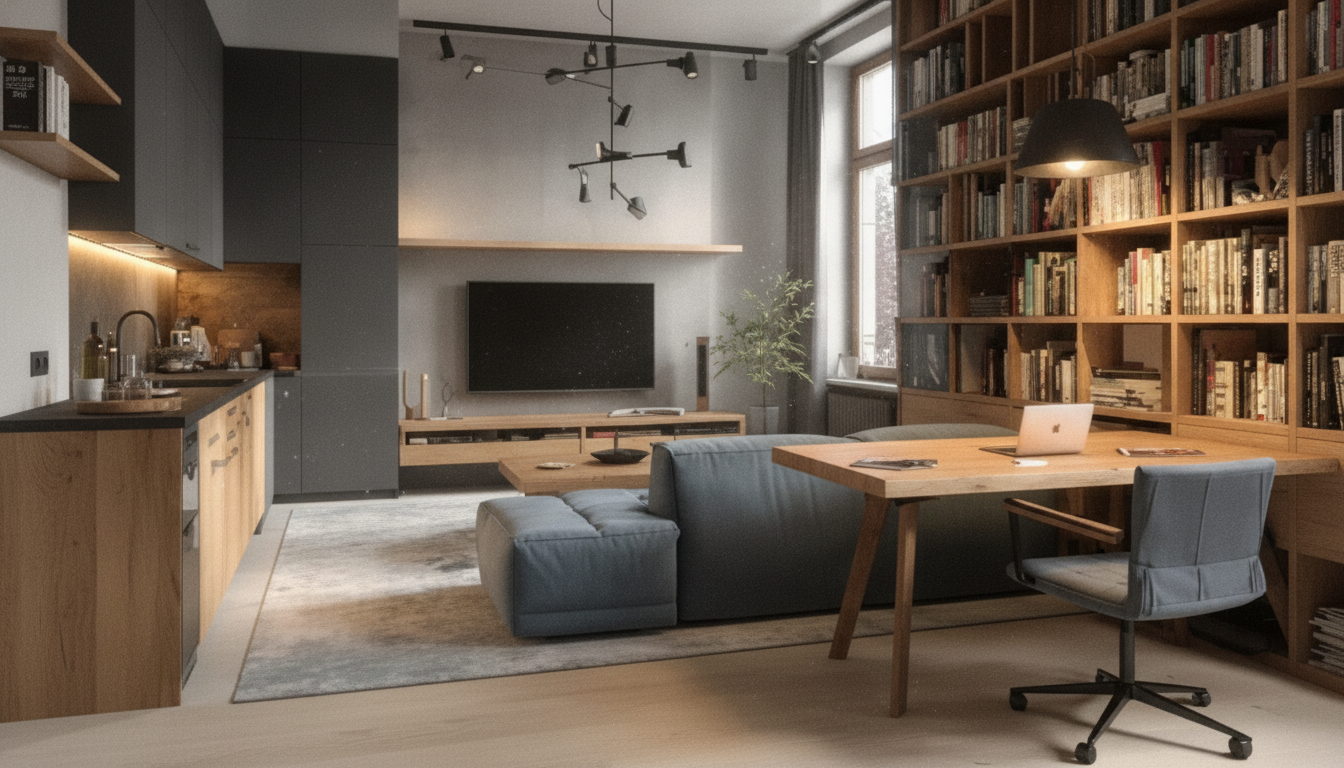
A well-planned multifunctional room can feel calm and spacious even when it has to do everything—work, rest, exercise, entertain, and store daily essentials. The difference isn’t square footage; it’s clarity. When the room is designed around real routines, flexible zones, and furniture that “resets” quickly, you stop reorganizing your life every time you switch activities.
The fastest way to end up with a cramped, chaotic room is buying pieces first and trying to make them work later. Start by designing around what actually happens in the space.
Tip: if a use requires more than 5–10 minutes to set up, it won’t happen consistently. Your layout should make the “right” choice the easiest choice.
Zoning doesn’t mean building walls. It means creating clear “homes” for each activity so your brain doesn’t have to renegotiate the room every time you walk in.
| Method | Best for | Pros | Watch-outs |
|---|---|---|---|
| Rug + floor lamp | Living/work split | Fast, inexpensive, no installation | Can shrink the room if rug is too small |
| Curtain track | Hiding bed/desk/gear | Instant reset; softens sound | Needs ceiling/wall mounting; choose washable fabric |
| Folding screen | Video calls, guest privacy | Portable; doubles as decor | Stability and storage when folded |
| Open shelving divider | Storage + separation | Adds storage while defining zones | Can look messy; use bins and consistent containers |
| Murphy/sofa bed | Guest-ready rooms | Maximizes floor space when stored | Measure clearance; consider install requirements |
Multifunctional rooms work best when they have a few “anchors” and a lot of supporting pieces that move, fold, stack, or store away cleanly.
A practical rule: if an item doesn’t have a home, the room becomes its home. Storage doesn’t need to be bigger—it needs to be more specific.
The goal isn’t a room that stays perfect. It’s a room that returns to functional quickly. A 2–5 minute reset beats a once-a-week overhaul every time.
If the room keeps “almost working,” the missing piece is usually a repeatable system—one that connects layout, storage categories, and quick resets. How to Design One Space for Many Uses: 3-in-1 Multifunctional Space Design Bundle is built to help turn daily routines into a clear plan you can maintain.
If one of your key room modes includes exercise, pair your setup with a simple, consistent plan like the Home Cardio Blast Checklist so your “wellness corner” is as easy to use as your desk.
Use a convertible sleep solution (sleeper sofa or wall bed), and choose a desk setup that can visually “close” with tidy cables and a simple screen or cover. Keep a guest-ready bin stocked with linens so the switch is a quick checklist, not a full reorganization.
Reduce visual noise: prioritize closed storage, use consistent containers, and limit extra surfaces that collect piles. Define one intentional drop zone and keep the floor clear with vertical storage and wall hooks.
Clear a consistent rectangle based on your workouts—typically a mat-length plus a small buffer for movement and safe footing. Store gear vertically, choose foldable equipment, and keep a fully unobstructed pathway to avoid trips and cramped motion.





Leave a comment