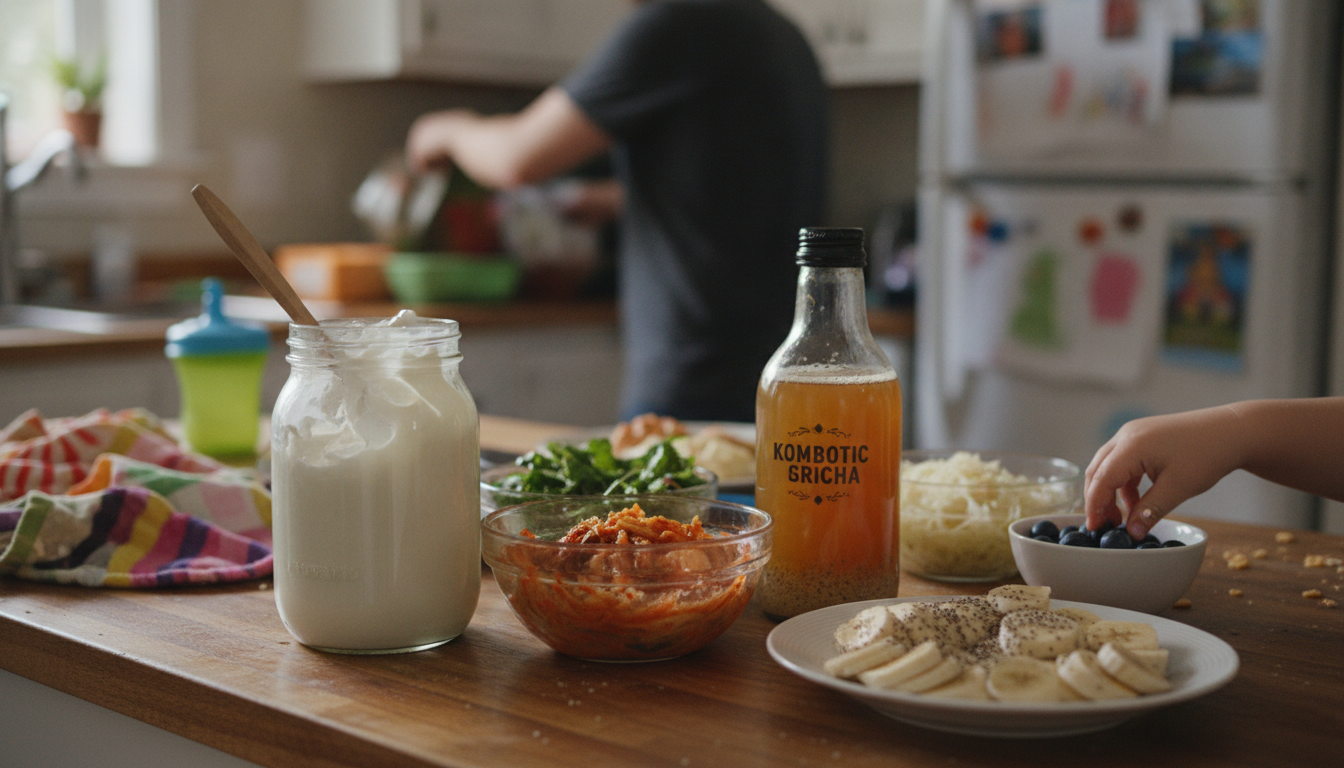
Natural probiotics come from foods that are fermented with live, active cultures. These beneficial bacteria can support a balanced gut microbiome when eaten regularly. Here are five easy-to-find options to add to meals and snacks.
Traditional yogurt is made by fermenting milk with bacteria such as Lactobacillus and Bifidobacterium. Choose plain, unsweetened yogurt labeled “live and active cultures,” since some products may be heat-treated after fermentation.
Kefir is a tangy, drinkable fermented milk (or sometimes water-based) beverage. It typically contains a wider variety of live microbes than yogurt, making it a convenient probiotic choice in smoothies, overnight oats, or sipped on its own.
Sauerkraut is fermented cabbage that can provide live bacteria when it’s unpasteurized and kept refrigerated. Use it as a topping for bowls, salads, or sandwiches; heat can reduce live cultures, so add it after cooking when possible.
Kimchi is a spicy, fermented vegetable dish—often made with napa cabbage, radish, garlic, and ginger. Like sauerkraut, look for refrigerated versions that haven’t been pasteurized to maximize the chance of live cultures.
Miso is a fermented soybean paste used in soups, dressings, and marinades. To help preserve its beneficial microbes, stir miso into warm (not boiling) liquids or whisk it into sauces after cooking.
For more fermented options and practical ways to fit them into everyday meals, see the complete guide here: https://splendyn.com/guide-probiotic-foods-checklist-daily-guide-live-cultures/.
For 5 Natural Probiotic Foods to Add to Your Diet, the best answer depends on fit, material, care instructions, and how the product will be used day to day.
Checking those details first helps avoid a poor match and keeps the choice practical after delivery.
Probiotics are live beneficial microorganisms found in certain fermented foods and supplements. Prebiotics are fibers and plant compounds that feed those beneficial microbes, helping them grow and stay active.







Leave a comment