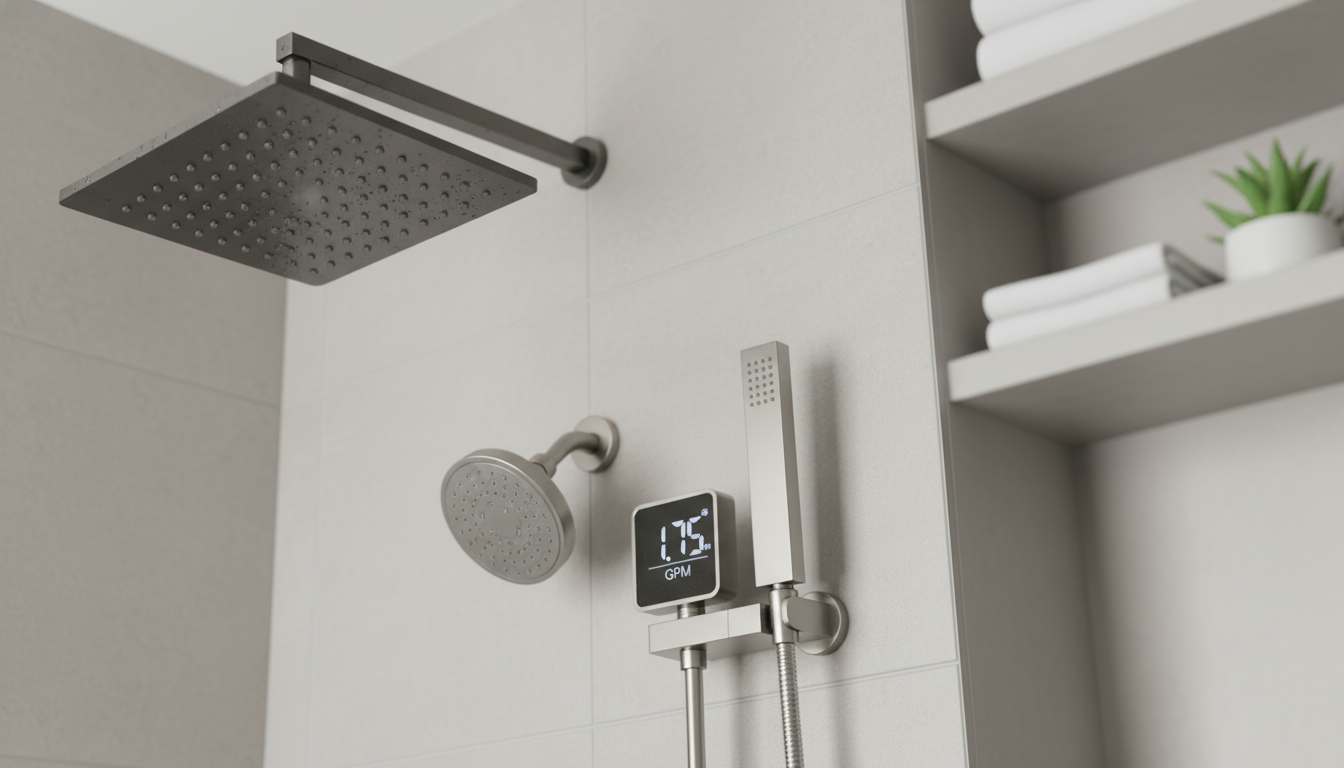
No. While 1.75 gallons per minute (gpm) is a common water-saving flow rate, shower heads are sold in several different gpm ratings. Some models are designed to hit lower targets for maximum conservation, while others run closer to the legal maximum allowed in many areas.
Today’s market typically includes low-flow options around 1.5–1.8 gpm, standard-efficient models near 2.0 gpm, and higher-flow designs up to about 2.5 gpm where permitted. The “right” number often depends on local rules, the shower head style (fixed, handheld, rain), and whether the product includes a flow restrictor.
1.75 gpm has become a popular compromise between saving water and maintaining a satisfying shower feel. Manufacturers can pair that flow rate with pressure-compensating technology, optimized nozzles, or air-induction designs to keep the spray strong even with less water.
Check the packaging, product page, or the label stamped on the shower head (many list the maximum flow rate). If the listing shows “1.75 GPM at 80 PSI,” that’s the rated flow under typical test conditions. For deeper details on flow rates, regulations, and what affects performance, see the full guide here: https://splendyn.com/are-all-shower-heads-gpm/.
Some shower heads include removable or interchangeable flow restrictors, but removing a restrictor may be illegal in certain locations and can increase water use significantly. If you want a different experience, it’s usually better to choose a model designed for your preferred flow rate and spray pattern rather than modifying parts.
In many places in the U.S., the common maximum is 2.5 gpm, though some states and municipalities require lower limits. Always check local plumbing codes or retailer listings for compliance in your area.





Leave a comment