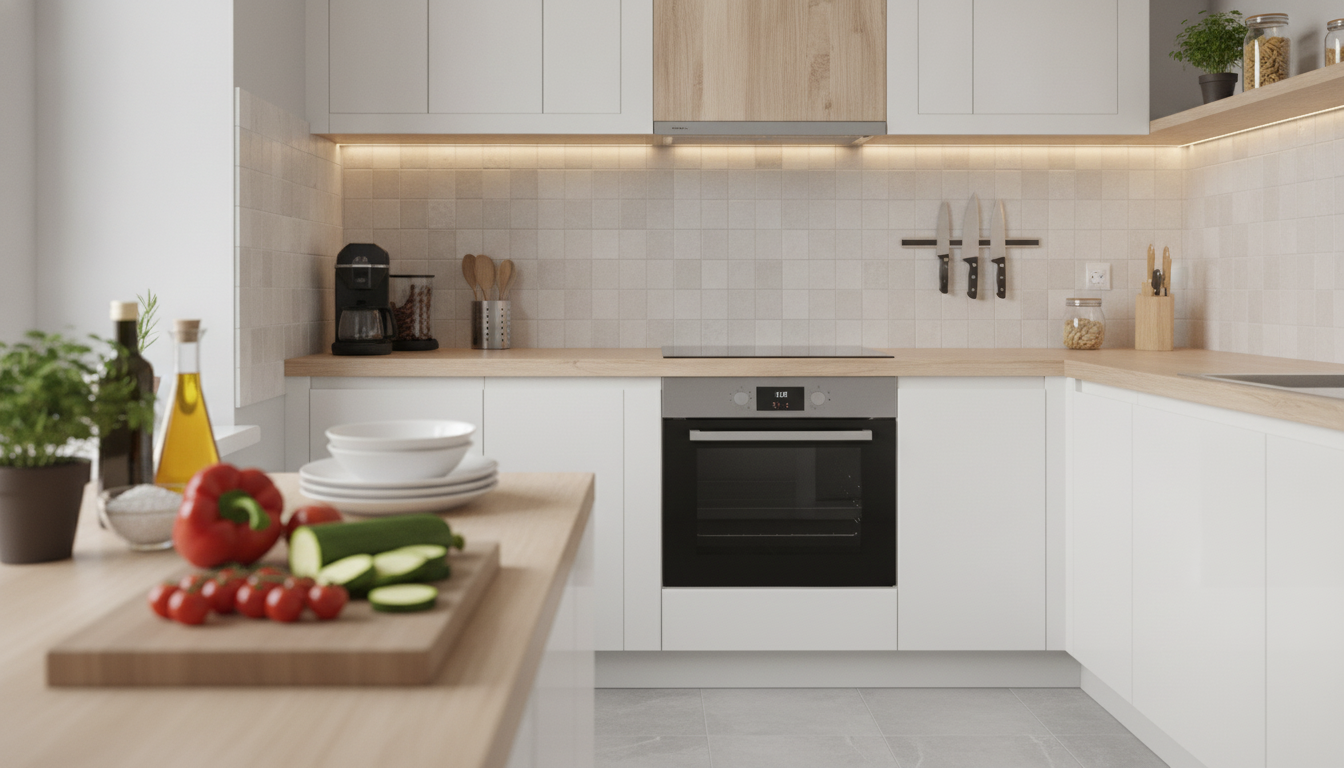
A small kitchen can feel crowded, chaotic, and slow—especially when the layout forces extra steps, tools don’t have a home, and prep space disappears the moment cooking starts. A smarter kitchen is less about buying more and more about setting up simple zones, right-sizing what’s stored, and using space-saving habits that keep daily cooking smooth and cleanup quick.
Efficiency in a small space isn’t about perfection—it’s about removing the tiny obstacles that steal time and patience.
Before reorganizing, take a quick snapshot of how you actually cook. This prevents “pretty” setups that don’t match real life.
If food safety is part of your reset (it should be), keep “clean as you go” simple: wash hands, wipe surfaces, and keep raw and ready-to-eat ingredients separated. The CDC’s Clean, Separate, Cook, Chill guidance is a practical baseline for everyday cooking habits.
You don’t need a large kitchen to have zones—you just need consistent “homes” for the items you touch most. Even a single counter can support zones by using trays, caddies, and one dedicated drawer per job.
Good storage makes items easier to grab and easier to put away. Bad storage creates “organizing projects” that quietly become clutter.
| Upgrade | Best for | Helps prevent |
|---|---|---|
| Shelf riser | Cabinets with tall empty space | Stacking chaos and hard-to-reach dishes |
| Drawer dividers | Utensil and tool drawers | Jammed drawers and duplicate purchases |
| Slim rolling cart | Gaps beside fridge or cabinets | Counter crowding and pantry overflow |
| Over-sink drying rack | No counter space for drying | Wet countertops and towel piles |
| Lazy Susan/turntable | Corner cabinets or deep shelves | Forgotten items and double-buying |
A small kitchen works best when it’s curated. The goal isn’t minimalism—it’s reliability: everything you keep should earn an easy-to-reach spot.
For a straightforward approach to sanitizing kitchen surfaces and tools, the USDA Food Safety and Inspection Service guidance on kitchen cleanup is a helpful reference.
If you want a structured reset you can follow step by step, Making Your Tiny Kitchen Work Smarter (digital download) lays out a practical checklist approach for zoning, decluttering, and placing high-use items where they naturally belong.
If you’re building a consistent “closing routine” and like checklists for staying on top of small daily tasks, Car Cleaning Hacks to Keep Your Ride Fresh – Digital Checklist is another simple way to practice quick, repeatable reset habits that translate well to home organization routines.
The best layout is the one that minimizes steps between the fridge, sink, prep space, and stove. Focus on creating small zones and keeping frequently used tools at hand level; a few smart placement changes can improve speed more than a major remodel.
Use vertical organizers (risers, stackable bins), store items by frequency, and group food and tools by category so you can find and restock quickly. Door space and a slim rolling cart can also add storage without taking over your counter.
Keep only daily-use items that genuinely save time (like a coffee maker) and protect one clear prep zone for chopping and mixing. Use a single tray or small bin as a “drop zone” to contain random items instead of letting them spread.






Leave a comment