Busy days can turn focus, confidence, and morale into moving targets. A practical mindfulness toolkit helps convert stress into steadier attention, calmer communication, and more consistent motivation—without needing long sessions or a complete routine overhaul. This guide breaks down what a workplace mindfulness bundle is, who benefits most, how to use it week-to-week, and what to look for before buying.
A workplace mindfulness toolkit is a set of guided practices and quick resources built around common workday stressors—meetings, deadlines, feedback, and interpersonal friction. Unlike “wellness” content that assumes a long morning routine, workplace tools are designed for short, repeatable use (often 2–10 minutes) between tasks.
Done consistently, these micro-practices support skills that show up directly on the job: attention control (staying present in meetings), emotional regulation (not spiraling after a tense message), and healthier self-talk (recovering confidence after mistakes). They can be a practical performance-and-wellbeing support system, but they are not a substitute for clinical care when anxiety, depression, or burnout symptoms need professional attention.
Mindfulness at work is less about “emptying your mind” and more about noticing what’s happening—then choosing a better next step. That shift can affect confidence, mood, and momentum in very concrete ways.
For a deeper look at the research landscape and practical applications, see the American Psychological Association’s overview of mindfulness (APA – Mindfulness meditation) and the National Center for Complementary and Integrative Health’s summary of effectiveness and safety (NCCIH – Meditation and mindfulness). For workplace context, Harvard Business Review also discusses benefits and limitations (HBR – What mindfulness can do for you).
| Work situation | What it tends to trigger | Micro-practice to try |
|---|---|---|
| Back-to-back meetings | Mental fatigue, irritability | 60-second breathing reset before joining the next call |
| Critical feedback | Defensiveness, self-doubt | Name the emotion + reframe to a learning question |
| Big presentation | Anxiety, shaky focus | Grounding: 5 senses scan + slow exhale |
| Procrastination on a hard task | Overwhelm, avoidance | 2-minute “first tiny step” intention + timer |
| Conflict or tense chat | Reactive speech, blame | Pause–breathe–choose: one clarifying question before responding |
A well-rounded bundle typically combines quick calming tools with confidence and focus supports, plus simple trackers that make progress feel tangible rather than vague.
The easiest way to make mindfulness “work at work” is to keep it cue-based and lightweight. Instead of relying on willpower, connect one short practice to a moment that already happens every day.
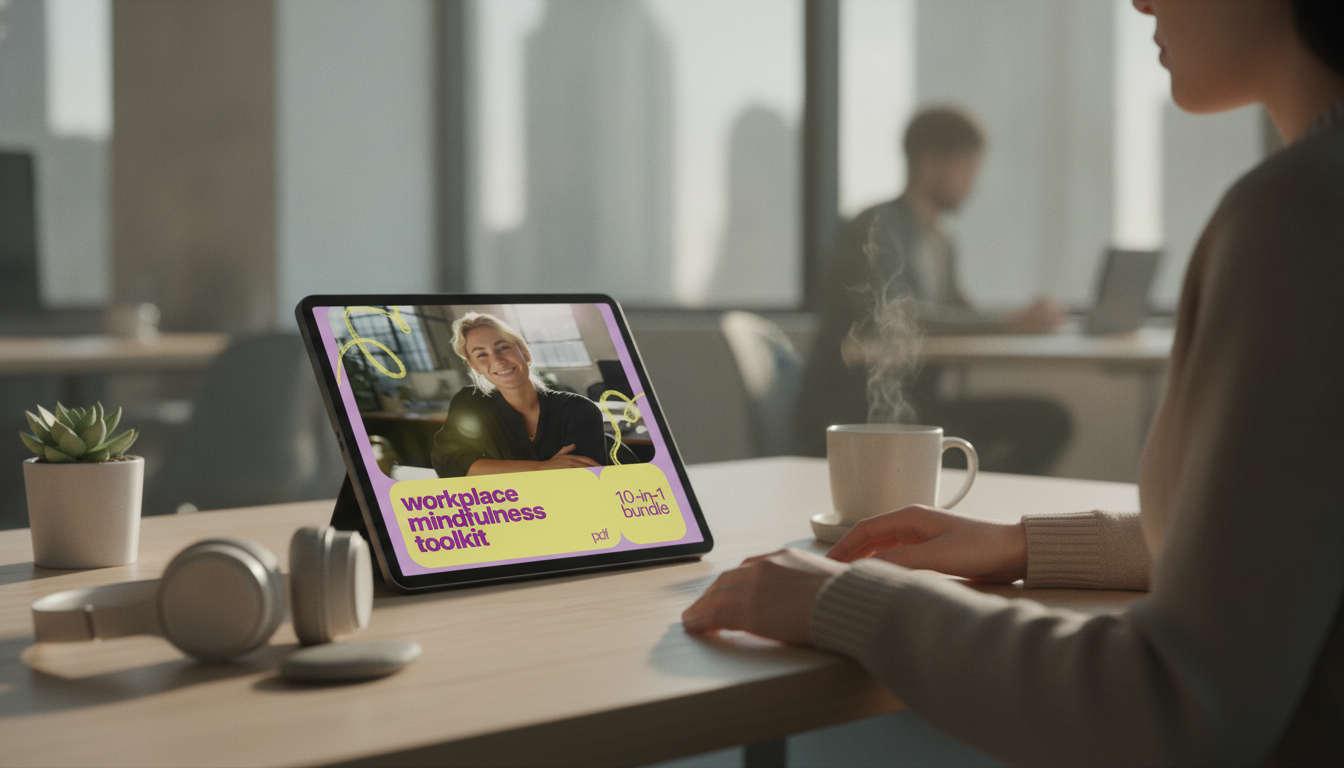
If the goal is a single set of resources that targets confidence under pressure, steadier positivity, and reliable motivation, a multi-part bundle can be easier than assembling separate tools from scratch. Workplace Mindfulness Toolkit: 10-in-1 Bundle for Confidence, Positivity & Motivation at Work is designed to support a repeatable micro-practice routine that fits between tasks, meetings, and deadlines—without requiring long sessions.
For those balancing work stress with parenting demands (especially when stress “spills over” into evenings and mornings), pairing a work-focused routine with a home-focused one can help. Consider Stay Calm Within Mindful Parenting System – 4-in-1 Bundle for Parents for calmer transitions outside work hours.
| Resource | Best for | When to use |
|---|---|---|
| Workplace Mindfulness Toolkit (10-in-1 bundle) | Confidence, positivity, and motivation at work | Before/after meetings, deep-work blocks, end-of-day reset |
| Stay Calm Within Mindful Parenting System (4-in-1 bundle) | Calm routines for parents (stress spillover into workdays) | Morning setup, transitions after school pickup, evening decompression |
Some benefits—like calmer breathing and clearer focus—can show up the same day. Confidence and motivation usually improve over days to weeks with consistency, so a two-week trial with a daily 2–5 minute anchor is a realistic way to gauge impact.
Yes, especially when framed as attention and stress-management skills with professional language. It also works best when usage is privacy-friendly and team participation is optional rather than forced.
Use micro-options: a 60-second breath reset, a 2-minute grounding exercise, a quick intention before opening email, or a short post-meeting reflection. Consistency matters more than duration.





Leave a comment